missing translation for 'onlineSavingsMsg'
Learn More
Learn More
Invitrogen™ ADARB1 Polyclonal Antibody

Rabbit Polyclonal Antibody
Brand: Invitrogen™ PA534828
This item is not returnable.
View return policy
Description
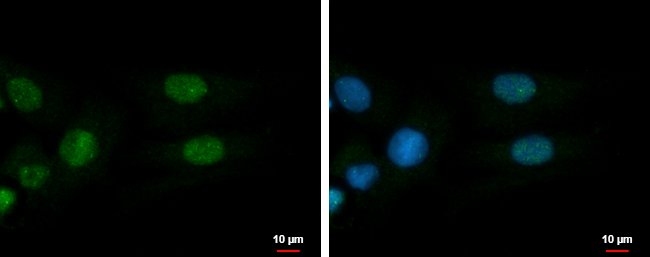
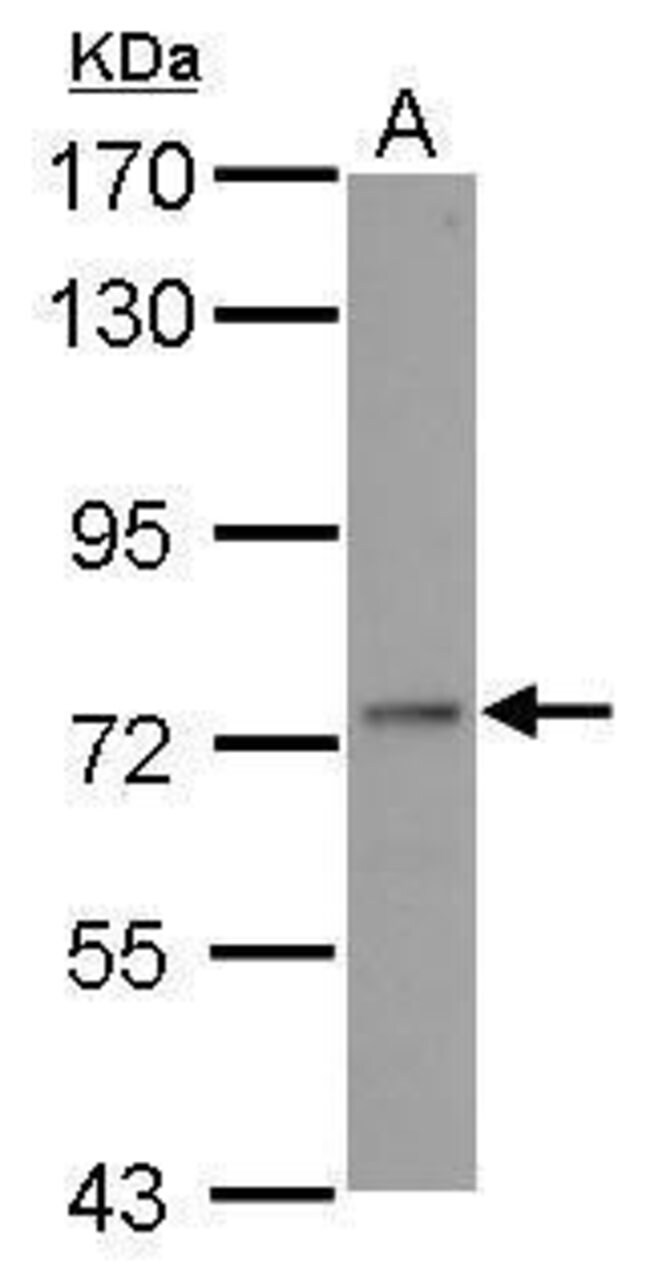
Recommended positive controls: NT2D1. Predicted reactivity: Human (99%), Mouse (96%), Rat (96%), Chicken (82%), Chimpanzee (99%). Store product as a concentrated solution. Centrifuge briefly prior to opening the vial.
Catalyzes the hydrolytic deamination of adenosine to inosine in double-stranded RNA (dsRNA) referred to as A-to-I RNA editing. This may affect gene expression and function in a number of ways that include mRNA translation by changing codons and hence the amino acid sequence of proteins; pre-mRNA splicing by altering splice site recognition sequences; RNA stability by changing sequences involved in nuclease recognition; genetic stability in the case of RNA virus genomes by changing sequences during viral RNA replication; and RNA structure-dependent activities such as microRNA production or targeting or protein-RNA interactions. Can edit both viral and cellular RNAs and can edit RNAs at multiple sites (hyper-editing) or at specific sites (site-specific editing). Its cellular RNA substrates include: bladder cancer-associated protein (BLCAP), neurotransmitter receptors for glutamate (GRIA2 and GRIK2) and serotonin (HTR2C), GABA receptor (GABRA3) and potassium voltage-gated channel (KCNA1). Site-specific RNA editing of transcripts encoding these proteins results in amino acid substitutions which consequently alter their functional activities. Edits GRIA2 at both the Q/R and R/G sites efficiently but converts the adenosine in hotspot1 much less efficiently. Can exert a proviral effect towards human immunodeficiency virus type 1 (HIV-1) and enhances its replication via both an editing-dependent and editing-independent mechanism. The former involves editing of adenosines in the 5'UTR while the latter occurs via suppression of EIF2AK2/PKR activation and function. Can inhibit cell proliferation and migration and can stimulate exocytosis.
Specifications
| ADARB1 | |
| Polyclonal | |
| Unconjugated | |
| ADARB1 | |
| 1700057H01Rik; Adar2; Adarb1; adenosine deaminase, RNA specific B1; adenosine deaminase, RNA-specific, B1; adenosine deaminase, RNA-specific, B1 (homolog of rat RED1); adenosine deaminase, RNA-specific, B1 (RED1 homolog rat); AW124433; AW558573; BB220382; D10Bwg0447e; Double-stranded RNA-specific editase 1; DRABA2; DRADA2; dsRNA adenosine deaminase; dsRNA adenosine deaminase DRADA2; Red1; RED1 homolog; RNA editase; RNA editing deaminase 1; RNA editing deaminase of glutamate receptors; RNA-editing deaminase 1; RNA-editing enzyme 1 | |
| Rabbit | |
| Antigen affinity chromatography | |
| RUO | |
| 104 | |
| Store at 4°C short term. For long term storage, store at -20°C, avoiding freeze/thaw cycles. | |
| Liquid |
| Western Blot, Immunocytochemistry | |
| 1 mg/mL | |
| 0.1M tris glycine with 20% glycerol and 0.01% thimerosal; pH 7 | |
| P78563 | |
| ADARB1 | |
| Recombinant protein encompassing a sequence within the center region of human ADAR2. The exact sequence is proprietary. | |
| 100 μL | |
| Primary | |
| Human | |
| Antibody | |
| IgG |
Product Content Correction
Your input is important to us. Please complete this form to provide feedback related to the content on this product.
Product Title
Spot an opportunity for improvement?Share a Content Correction