Learn More
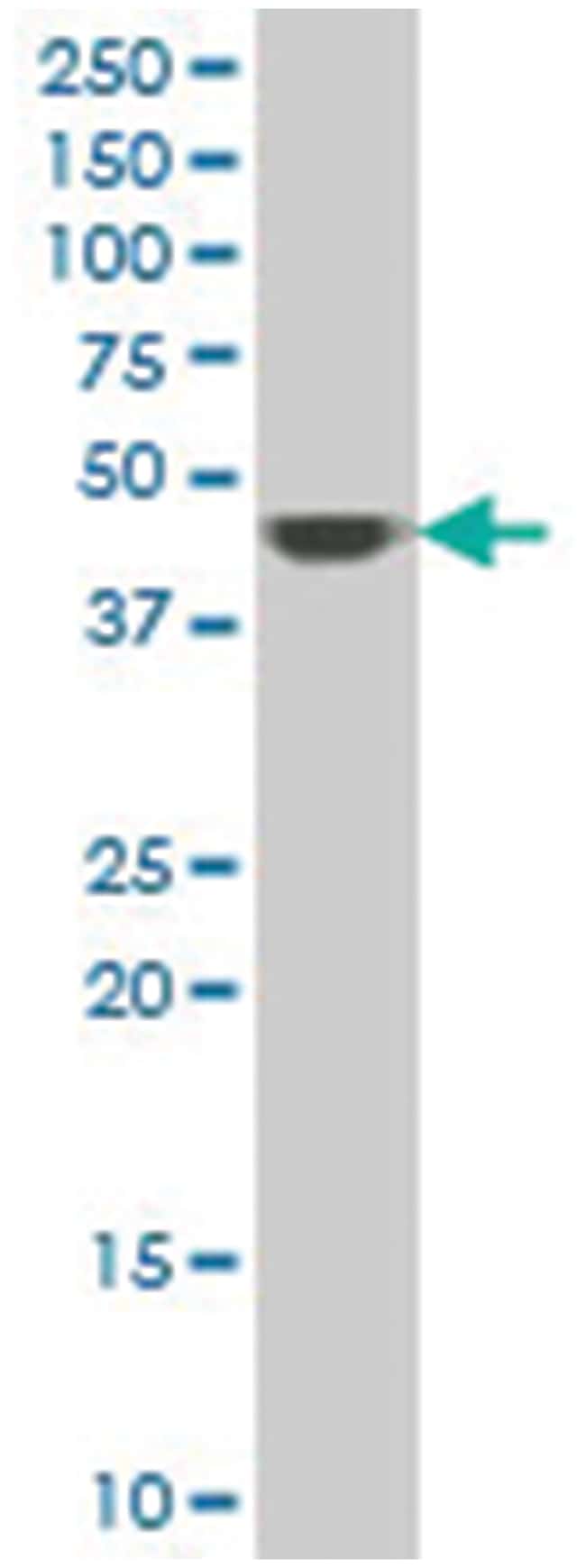
aminocarboxymuconate semialdehyde decarboxylase, Mouse, Polyclonal Antibody, Abnova™
Description
The neuronal excitotoxin quinolinate is an intermediate in the de novo synthesis pathway of NAD from tryptophan, and has been implicated in the pathogenesis of several neurodegenerative disorders. Quinolinate is derived from alpha-amino-beta-carboxy-muconate-epsilon-semialdehyde (ACMS). ACMSD (ACMS decarboxylase; EC 4.1.1.45) can divert ACMS to a benign catabolite and thus prevent the accumulation of quinolinate from ACMS.[supplied by OMIM
Specifications
Specifications
| Antigen | aminocarboxymuconate semialdehyde decarboxylase |
| Applications | ELISA, Western Blot |
| Classification | Polyclonal |
| Conjugate | Unconjugated |
| Description | Mouse polyclonal antibody raised against a partial recombinant ACMSD. |
| Formulation | 50% glycerol |
| Gene | ACMSD |
| Gene Accession No. | NM_138326 |
| Gene Symbols | ACMSD |
| Host Species | Mouse |
| Show More |
By clicking Submit, you acknowledge that you may be contacted by Fisher Scientific in regards to the feedback you have provided in this form. We will not share your information for any other purposes. All contact information provided shall also be maintained in accordance with our Privacy Policy.