missing translation for 'onlineSavingsMsg'
Learn More
Learn More
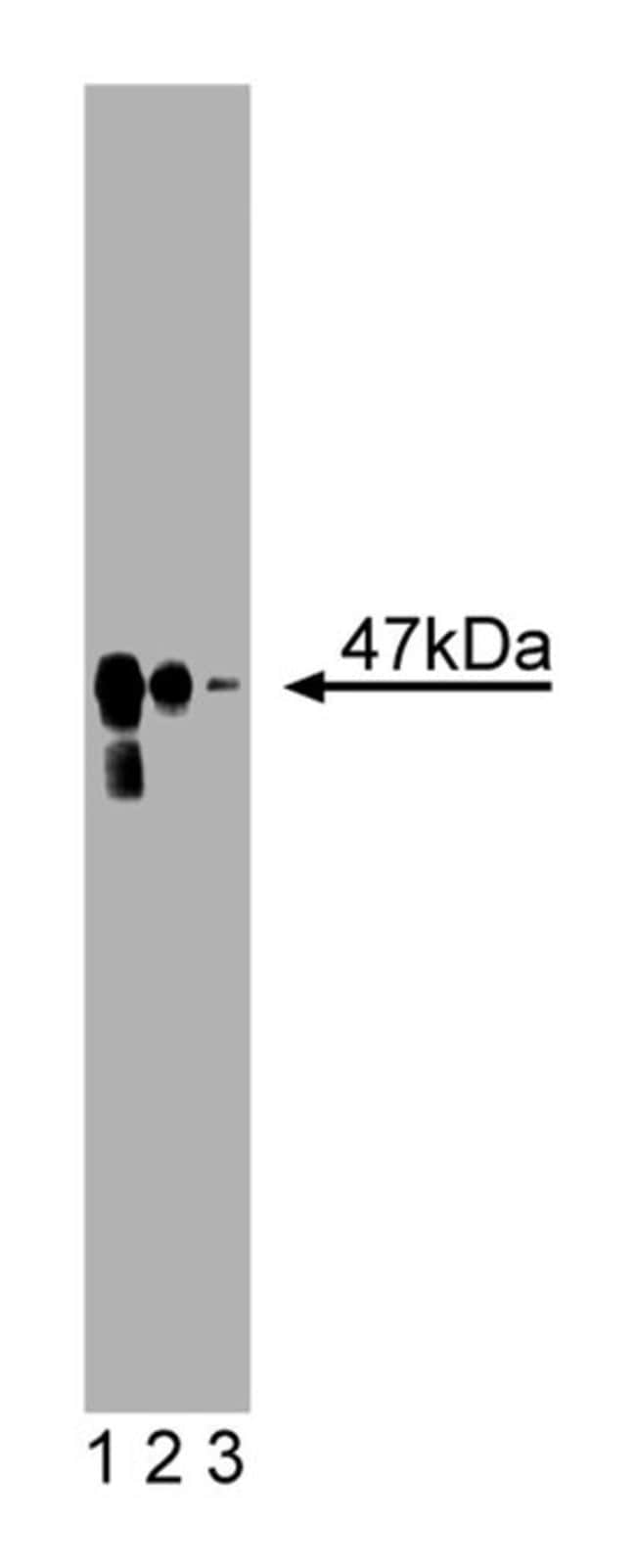
PAI-1 Mouse, Unlabeled, Clone: 41, BD
Mouse Monoclonal Antibody
Brand: BD Biosciences 612024

This item is not returnable.
View return policy
Description
Fibrinolysis is regulated by the plasminogen activators, tissue plasminogen activator (tPA) and urokinase PA (uPA), and by the plasminogen activator-inhibitors (PAIs). Two PAIs include the serpin family members, PAI-1 and PAI-2. PAI-1 is a glycoprotein found in plasma, platelets, endothelial cells, hepatoma cells, and fibrosarcoma cells. Thrombin, endotoxin, and IL-1 induce PAI-1 synthesis in endothelial cells, which is where the major portion of plasma PAI-1 is produced. PAI-2 is a glycoprotein expressed in placenta and monocyte macrophages. The uPA/plasmin system may play a key role in cancer progression through degradation of the extracellular matrix during tumor cell migration. Paradoxically, high levels of PAI-1 are also predictive of poor prognosis of cancer patients. This finding may be a result of the role of plasmin proteolysis in the prevention of tumor vessel assembly. PAI-1 can promote tumor angiogenesis, and the mechanism may involve PAI-induced regulation of plasmin proteolysis during tumor angiogenesis. Thus, PAI-1 is a serpin protease inhibitor that is important for the regulation of plasmin proteolysis during fibrinolysis and extracellular matrix degradation.
Host Species: Mouse
Clone: 41
Isotype: IgG1
Species Reactivity [for Features Main]: Human
Immunogen: Human PAI-1 aa. 207-329
Immunofluorescence, Western Blotting

Specifications
| PAI-1 | |
| Monoclonal | |
| 250μg/mL | |
| Aqueous buffered solution containing BSA, glycerol, and ≤0.09% sodium azide. | |
| Human PAI-1 aa. 207-329 | |
| 50 μg | |
| Cell Biology | |
| Canine, Chicken, Human, Mouse, Rat | |
| IgG1 |
| Western Blot | |
| 41 | |
| Unconjugated | |
| Mouse | |
| Affinity Purified | |
| RUO | |
| Primary | |
| Store undiluted at -20°C. |
Product Content Correction
Your input is important to us. Please complete this form to provide feedback related to the content on this product.
Product Title
For Research Use Only.
Spot an opportunity for improvement?Share a Content Correction