missing translation for 'onlineSavingsMsg'
Learn More
Learn More
Invitrogen™ ATPIF1 Polyclonal Antibody

Description
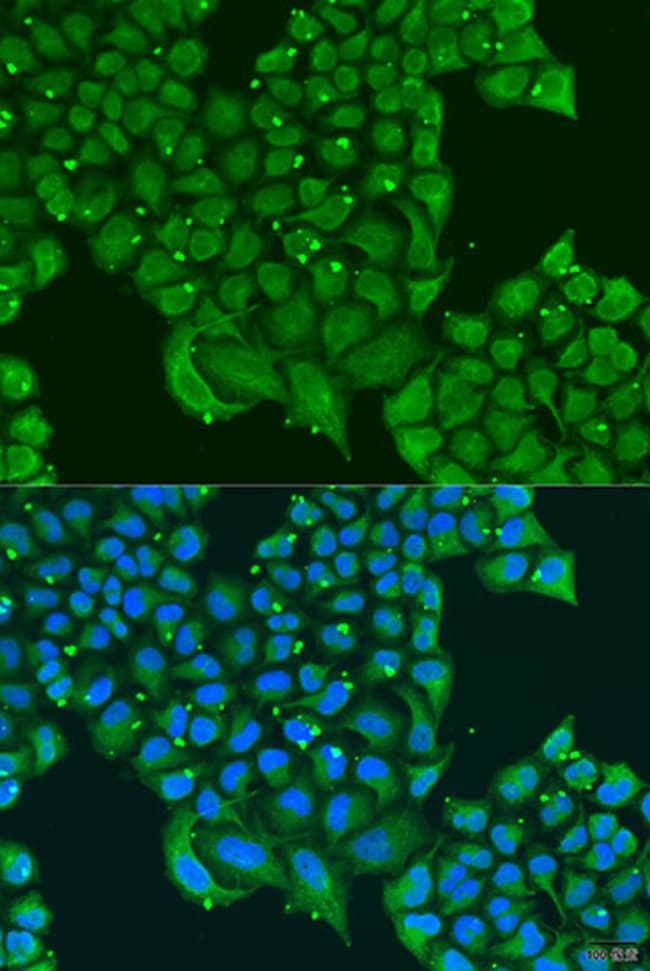
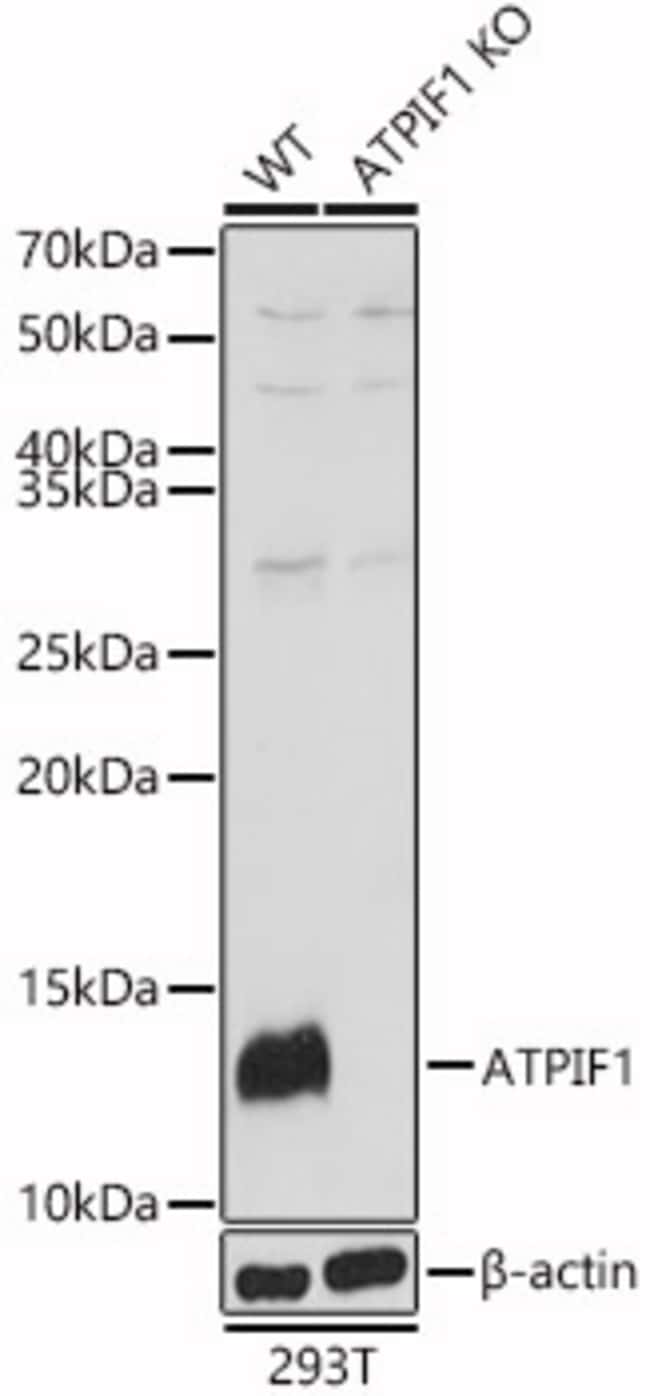
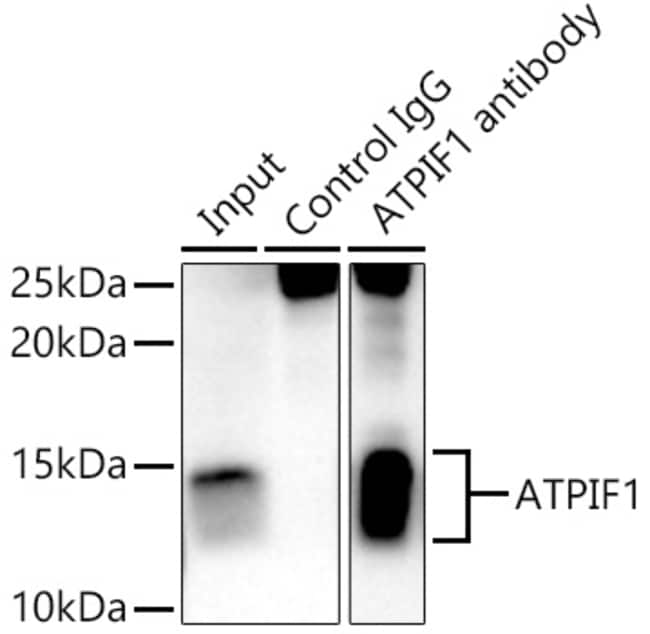
Positive Samples: MCF-7, 22Rv1, HeLa, H460, Mouse brain; Cellular Location: Mitochondrion.
Complex V, also called F1F0 ATPase or ATP synthase is extremely conserved through evolution and can be found in plants, fungi, bacteria, and animals. The ATP synthase enzyme is a transmembrane protein responsible for driving the reversible reaction from ADP + phosphate to ATP, in oxidative phosphorylation, and as a proton pumping ATPase. This reaction is accomplished by a flux of protons across the membrane as a result of electron transfer. The enzyme was thought to be localized exclusively to mitochondria; however, it has recently been identified on the plasma membrane of several cell types including hepatocytes where it functions as the HDL receptor, on endothelial cells where it may act as the angiostatin receptor, and on the surface of cancer cells. The ATP synthase protein has two main sections; the F1 ATP-ase (soluble) and the F0 ATP-ase (membrane embedded). The F1 section consists of the alpha, beta, gamma, delta, and epsilon subunits; while the F0 consists of a, b, and c subunits. The enzyme in mammals is composed of 17 subunits, five of which make up the easily detached F1. The remainder subunits are components of two stalk domains and the proton pumping F0 part of the machinery. Two of the subunits of the F0 part are encoded on mitochondrial DNA while the other subunits are nuclearly encoded. Mutations in the mitochondrial-encoded subunits of ATP synthase (Complex V) cause OXPHOS disease.

Specifications
Specifications
| Antigen | ATPIF1 |
| Applications | ELISA, Immunoprecipitation, Western Blot, Immunocytochemistry |
| Classification | Polyclonal |
| Concentration | 0.93 mg/mL |
| Conjugate | Unconjugated |
| Formulation | PBS with 50% glycerol and 0.02% sodium azide; pH 7.3 |
| Gene | ATP5IF1 |
| Gene Accession No. | O35143, Q9UII2 |
| Gene Alias | ATP synthase F1 subunit epsilon; ATP synthase inhibitor protein; ATP synthase inhibitory factor subunit 1; Atp5if1; ATPase inhibitor (rat mitochondrial IF1 protein); ATPase inhibitor protein; ATPase inhibitor, mitochondrial; ATPase inhibitory factor 1; ATPase inhibitory factor 1, precursor; ATPI; Atpif1; ATPIP; IF(1); IF1; IF1PA; inhibitor of F(1)F(o)-ATPase; IP |
| Gene Symbols | ATP5IF1, Atpif1 |
| Show More |
Product Title
By clicking Submit, you acknowledge that you may be contacted by Fisher Scientific in regards to the feedback you have provided in this form. We will not share your information for any other purposes. All contact information provided shall also be maintained in accordance with our Privacy Policy.
Spot an opportunity for improvement?