missing translation for 'onlineSavingsMsg'
Learn More
Learn More
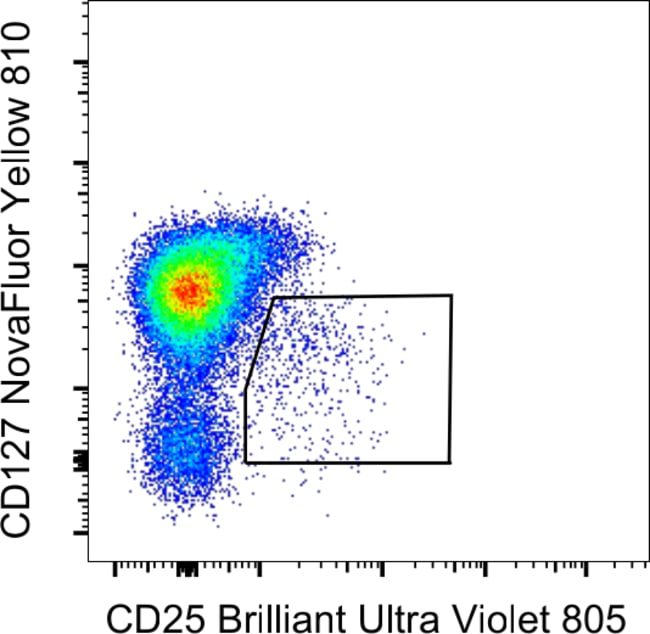
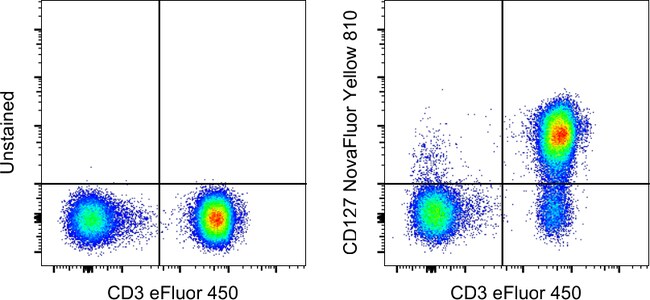
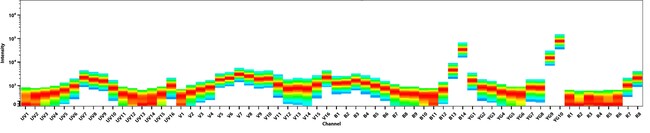
Invitrogen™ CD127 Monoclonal Antibody (eBioRDR5), NovaFluor™ Yellow 810, eBioscience™
Mouse Monoclonal Antibody
Brand: Invitrogen™ H017T02Y09-A
This item is not returnable.
View return policy
Description
Description: The eBioRDR5 monoclonal antibody reacts with human CD127 (Interleukin-7 Receptor alpha). This product contains 1 vial of NovaFluor conjugate and 1 vial of CellBlox Plus Blocking Buffer. Applications Tested: This eBioRDR5 antibody has been pre-titrated and tested by flow cytometric analysis of normal human peripheral blood cells. This can be used at 5 μL (0.4 μg) per test. A test is defined as the amount (μg) of antibody that will stain a cell sample in a final volume of 100 μL. Cell number should be determined empirically but can range from 10^5 to 10^8 cells/test Master mixes. Whole Blood compatibility: When utilizing whole blood (as opposed to density-gradient-purified PBMC), we recommend lysing red blood cells in bulk prior to staining with NovaFluor conjugates. Staining of whole blood with NovaFluor conjugates followed by lysis of red blood cells may result in higher-than-expected background staining.
CD127, also known as the Interleukin-7 receptor alpha chain (IL-7Ralpha), is a type I glycoprotein with a molecular weight of 75-80 kDa. It forms a multi-functional receptor complex with CD132, the common gamma chain, to create the IL-7 receptor (IL-7R), which is crucial for lymphopoiesis. The active IL-7 receptor is an alpha/gamma chain heterodimer, where the gamma chain also associates with the interleukin-2 receptor and primarily activates signal transduction, while the alpha chain determines specific signaling events through its association with cytoplasmic signaling molecules. CD127 is expressed by immature B cells through the early pre-B stage, thymocytes during various stages of development, and most mature T cells, with transient down-regulation upon activation. It promotes the proliferation of precursor B cells, thymocytes, T cell progenitors, and mature CD4+ and CD8+ T cells. Binding of IL-7 to CD127 results in signal transduction through several tyrosine kinase pathways, including the Jak/STAT pathway, and is indispensable for lymphocyte development and the control of homeostatic proliferation of T cells in the periphery. Additionally, IL-7R signaling is involved in the regulation of T cell receptor (TCR) locus rearrangement in gamma delta T cells. Interestingly, CD127 expression is down-regulated on CD4+CD25+ regulatory T cells (T regs). While CD4 and CD25 co-expression is commonly used to identify T regs, this method may include cells without suppressive activity. CD4+CD25+ cells that have down-regulated CD127 expression are significantly enriched for the regulatory T cell population, as defined by the expression of the T reg-specific transcription factor Foxp3 and their suppressive activity in vitro. Diseases associated with CD127 dysfunction include severe combined immunodeficiency and T cell negative/B cell negative/NK positive severe combined immunodeficiency.
Specifications
| CD127 | |
| Monoclonal | |
| 0.4 μg/Test | |
| PBS with BSA and 0.09% sodium azide; pH 7.2 | |
| P16871 | |
| Il7r | |
| Affinity chromatography | |
| RUO | |
| 3575 | |
| 4°C, store in dark, DO NOT FREEZE! | |
| Liquid |
| Flow Cytometry | |
| eBioRDR5 | |
| NovaFluor Yellow 810 | |
| Il7r | |
| CD127; CD127 antigen; CDW127; IL 7 receptor; IL 7R a; IL 7R subunit alpha; IL 7R α; IL 7Ra; IL 7Rα; IL7 receptor; IL-7 receptor alpha chain; IL7 receptor subunit alpha; IL-7 receptor subunit alpha; IL7R; IL-7R; IL7R a; IL7R alpha; IL7R subunit alpha; IL-7R subunit alpha; IL7R α; IL7RA; IL-7RA; IL-7Ralpha; IL-7R-alpha; IL7Rα; ILRA; interleukin 7 receptor; interleukin 7 receptor alpha chain; interleukin 7 receptor isoform H5-6; Interleukin7 receptor subunit alpha; interleukin-7 receptor subunit alpha; MGC107557; sCD127; soluble IL 7 receptor; soluble IL 7R | |
| Mouse | |
| 25 Tests | |
| Primary | |
| Human | |
| Antibody | |
| IgG1 κ |
Product Content Correction
Your input is important to us. Please complete this form to provide feedback related to the content on this product.
Product Title
Spot an opportunity for improvement?Share a Content Correction