missing translation for 'onlineSavingsMsg'
Learn More
Learn More
Invitrogen™ CD275 (B7-H2) Monoclonal Antibody (HK5.3), Functional Grade, eBioscience™

Rat Monoclonal Antibody
€ 497.00
Specifications
| Antigen | CD275 (B7-H2) |
|---|---|
| Clone | HK5.3 |
| Concentration | 1 mg/mL |
| Content And Storage | 4°C |
| Applications | Flow Cytometry, Functional Assay, Neutralization |
Description
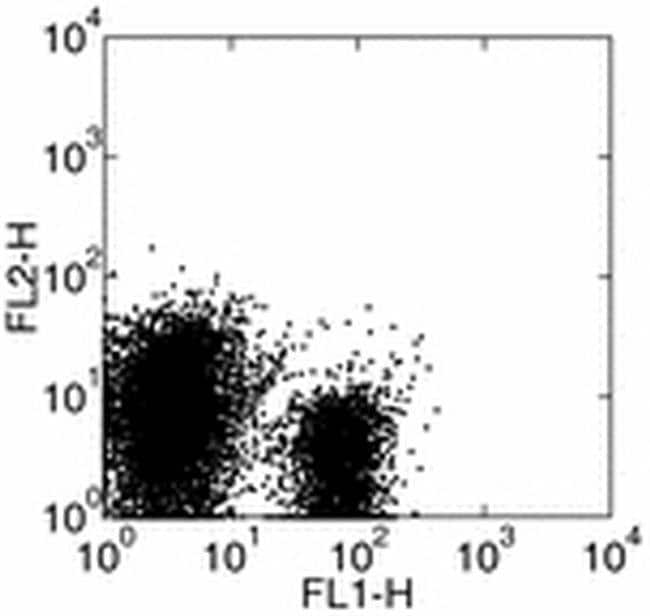
Description: The HK5.3 monoclonal antibody reacts with mouse B7RP-1, also known as B7h, B7-H2, GL50 and ICOS Ligand. B7RP-1, a member of the B7 family, has a predicted molecular weight of ~40 kDa and belongs to the Ig superfamily. Mouse B7RP-1 is expressed by antigen presenting cells including B cells, monocytes/macrophages and dendritic cells. B7RP-1 binds to the ICOS molecule (AILIM, CRP-1) expressed by activated T cells. The interaction of ICOS/B7RP-1 plays an important role in the T cell costimulation pathway. Applications Reported: The HK5.3 antibody has been reported for use in flow cytometric analysis. It has also been reported in blocking in functional assays. Applications Tested: The HK5.3 antibody has been tested by flow cytometric analysis of mouse splenocytes. This can be used at less than or equal to 0.5 μg per test. A test is defined as the amount (μg) of antibody that will stain a cell sample in a final volume of 100 μL. Cell number should be determined empirically but can range from 10^5 to 10^8 cells/test. It is recommended that the antibody be carefully titrated for optimal performance in the assay of interest. Storage and handling: Use in a sterile environment. Filtration: 0.2 μm post-manufacturing filtered. Purity: Greater than 90%, as determined by SDS-PAGE. Endotoxin Level: Less than 0.001 ng/μg antibody, as determined by LAL assay. Aggregation: Less than 10%, as determined by HPLC.
Inducible co-stimulator ligand (ICOSL) is a specific ligand on antigen-presenting cells and cells of the peripheral tissue that binds to the inducible co-stimulator receptor (ICOS). ICOS belongs to the CD28/CD152 receptor family that regulates T-cell activation and function. ICOSL is expressed on monocytes, dendritic cells and B cells and can be induced by inflammatory stimuli in peripheral tissue. Binding to ICOSL delivers a co-stimulatory signal for T cell proliferation and cytokine secretion.Specifications
| CD275 (B7-H2) | |
| 1 mg/mL | |
| Flow Cytometry, Functional Assay, Neutralization | |
| Functional Grade | |
| Rat | |
| RUO | |
| PBS with no preservative; pH 7.2 | |
| Q9JHJ8 | |
| 50723 | |
| Primary | |
| Affinity chromatography |
| HK5.3 | |
| 4°C | |
| Monoclonal | |
| Liquid | |
| IgG2a κ | |
| Mouse | |
| Icosl | |
| AU044799; B7 homolog 2; B7 homologue 2; B7h; B7H2; B7-H2; B7-like protein Gl50; B7-related protein 1; B7RP1; B7RP-1; BG071784; CD275; GI50; GL50; GL50-B; ICOS ligand; ICOSL; ICOS-L; ICOSLG; inducible T-cell costimulator ligand; inducible T-cell co-stimulator ligand; KIAA0653; LICOS; Ly115l; mKIAA0653; RGD1562791; transmembrane protein B7-H2 ICOS ligand | |
| Icosl | |
| Antibody |
Spot an opportunity for improvement?Share a Content Correction
Product Content Correction
Your input is important to us. Please complete this form to provide feedback related to the content on this product.
Product Title