missing translation for 'onlineSavingsMsg'
Learn More
Learn More
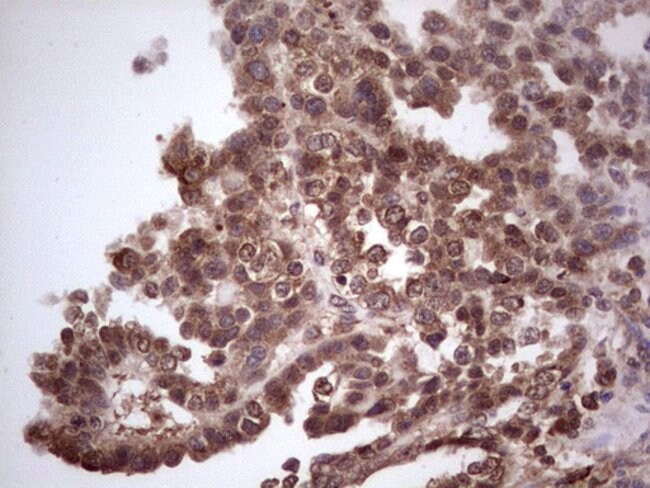
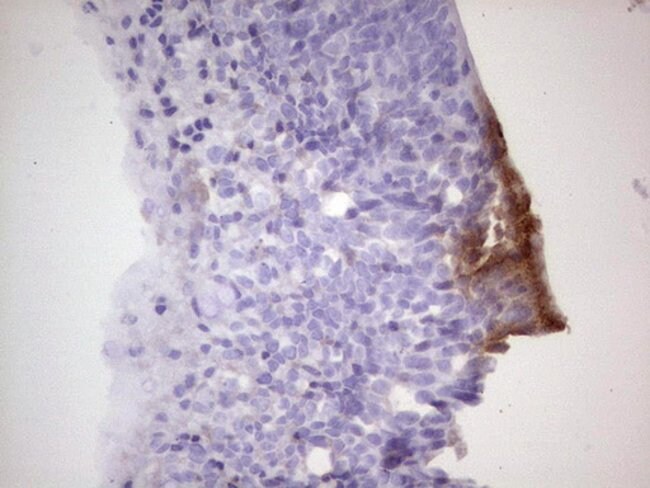
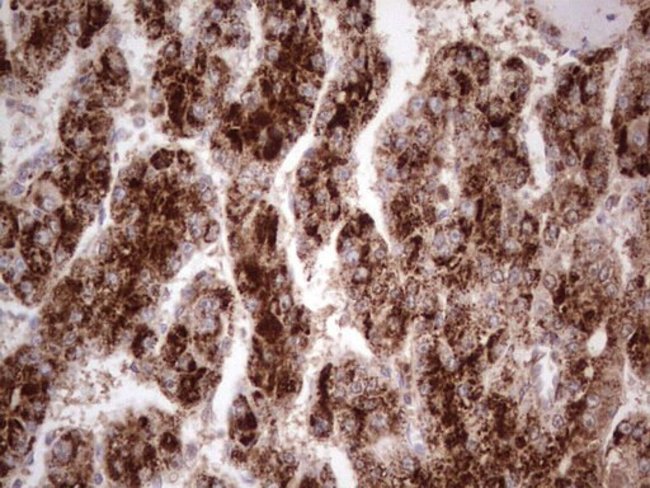
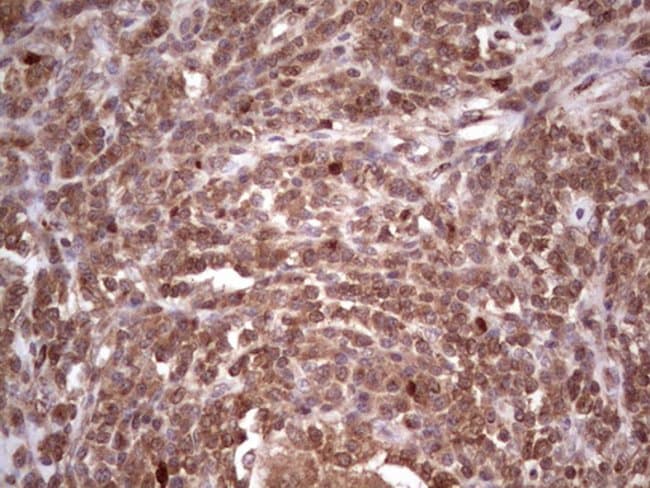
Invitrogen™ CDKL2 Monoclonal Antibody (OTI12C2)

Description
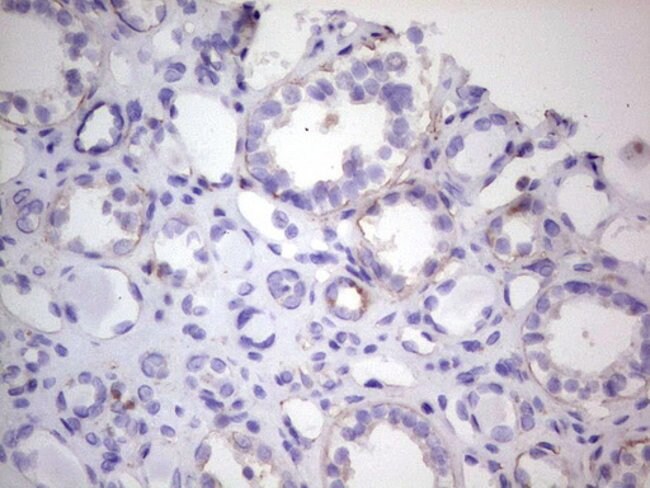
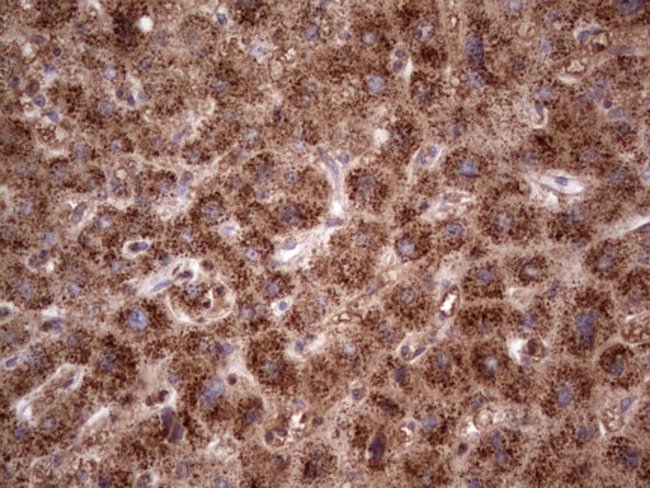
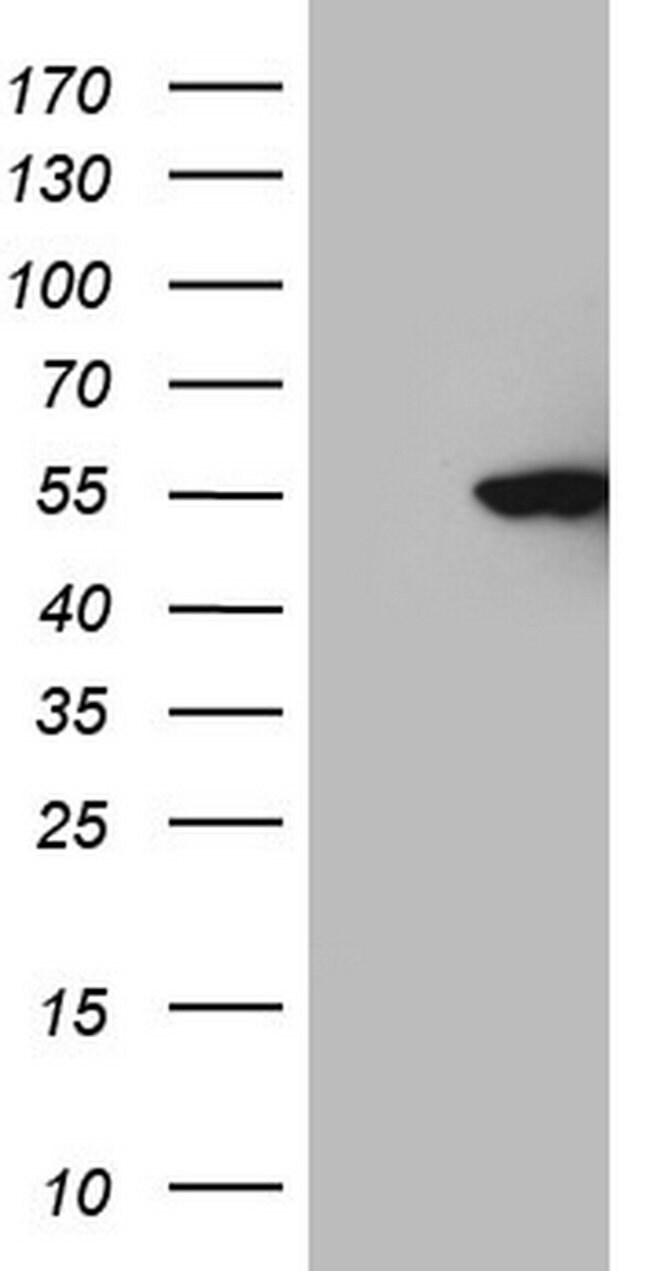
CDKL2 Monoclonal Antibody for Western Blot, IHC (P)
The activation of signal transduction pathways by growth factors, hormones and neurotransmitters is mediated by the MAP kinases ERK 1 and ERK 2. ERK proteins are regulated by dual phosphorylation at specific tyrosine and threonine sites mapping within a characteristic Thr-Glu-Tyr motif. The protein kinase p56 KKIAMRE is distantly related to the MAP kinase group of proteins and is closely related to p42 KKIALRE. KKIAMRE is predominantly expressed in testis, kidney, brain and lung. KKIAMRE contains the conserved MAP kinase dual phosphorylation motif in the sequence Thr-Asp-Tyr and is activated by treatment of cells by EGF. However, unlike other MAP kinases, the EGF-stimulated kinase activity does not require phosphorylation of KKIAMRE and KKIALRE in the Thr-Asp-Tyr motif.

Specifications
Specifications
| Antigen | CDKL2 |
| Applications | Immunohistochemistry (Paraffin), Western Blot |
| Classification | Monoclonal |
| Clone | OTI12C2 |
| Concentration | 1 mg/mL |
| Conjugate | Unconjugated |
| Formulation | PBS with 1% BSA, 50% glycerol and 0.02% sodium azide; pH 7.3 |
| Gene | CDKL2 |
| Gene Accession No. | Q92772 |
| Gene Alias | 5330436L21Rik; AI505225; CDC2-related kinase; Cdkl2; cyclin dependent kinase like 2; cyclin-dependent kinase-like 2; cyclin-dependent kinase-like 2 (CDC2-related kinase); Kkiamre; Kkm; P56; p56 KKIAMRE protein kinase; protein kinase p56 KKIAMRE; serine/threonine protein kinase KKIAMRE; serine/threonine-protein kinase KKIAMRE; testicular tissue protein Li 35 |
| Show More |
Product Title
By clicking Submit, you acknowledge that you may be contacted by Fisher Scientific in regards to the feedback you have provided in this form. We will not share your information for any other purposes. All contact information provided shall also be maintained in accordance with our Privacy Policy.
Spot an opportunity for improvement?