missing translation for 'onlineSavingsMsg'
Learn More
Learn More
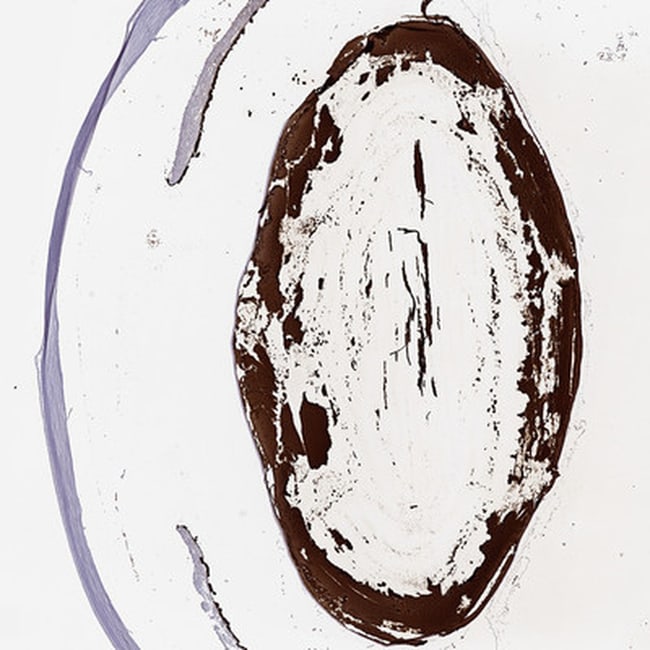
Invitrogen™ CRYBB1 Polyclonal Antibody

Description
Immunogen sequence: TTVPITSAKA AELPPGNYRL VVFELENFQG RRAEFSGECS NLADRGFDRV RSIIVSAGPW VAFEQSNFRG EMFILEKGEY PRWNTWSSSY RSDRLMSFRP IKMDAQE Highest antigen sequence indentity to the following orthologs: Mouse - 79%, Rat - 80%.
Crystallins are separated into two classes: taxon-specific, or enzyme, and ubiquitous. The latter class constitutes the major proteins of vertebrate eye lens and maintains the transparency and refractive index of the lens. Since lens central fiber cells lose their nuclei during development, these crystallins are made and then retained throughout life, making them extremely stable proteins. Mammalian lens crystallins are divided into alpha, beta, and gamma families; beta and gamma crystallins are also considered as a superfamily. Alpha and beta families are further divided into acidic and basic groups. Seven protein regions exist in crystallins: four homologous motifs, a connecting peptide, and N- and C-terminal extensions. Beta-crystallins, the most heterogeneous, differ by the presence of the C-terminal extension (present in the basic group, none in the acidic group). Beta-crystallins form aggregates of different sizes and are able to self-associate to form dimers or to form heterodimers with other beta-crystallins. This gene, a beta basic group member, undergoes extensive cleavage at its N-terminal extension during lens maturation. It is also a member of a gene cluster with beta-A4, beta-B2, and beta-B3.

Specifications
Specifications
| Antigen | CRYBB1 |
| Applications | Immunohistochemistry (Paraffin) |
| Classification | Polyclonal |
| Concentration | 0.1 mg/mL |
| Conjugate | Unconjugated |
| Formulation | PBS with 40% glycerol and 0.02% sodium azide; pH 7.2 |
| Gene | Crybb1 |
| Gene Accession No. | P53674 |
| Gene Alias | 3110006K12Rik; BB1CRY; Beta-B1 crystallin; beta-crystallin B1; Beta-crystallin B1B; CATCN3; CRYB1; CRYB11; Crybb1; crystallin beta B1; crystallin, beta B1; CTRCT17; eye lens structural protein |
| Gene Symbols | Crybb1 |
| Show More |
Product Title
By clicking Submit, you acknowledge that you may be contacted by Fisher Scientific in regards to the feedback you have provided in this form. We will not share your information for any other purposes. All contact information provided shall also be maintained in accordance with our Privacy Policy.
Spot an opportunity for improvement?