missing translation for 'onlineSavingsMsg'
Learn More
Learn More
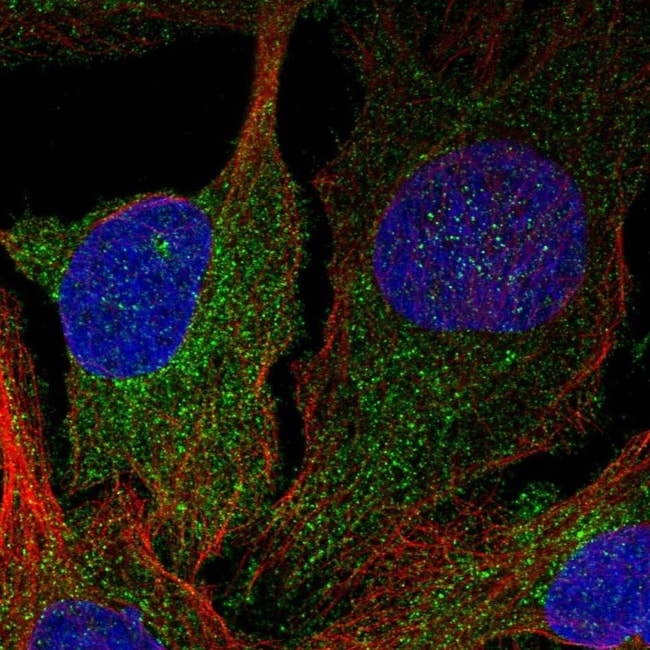
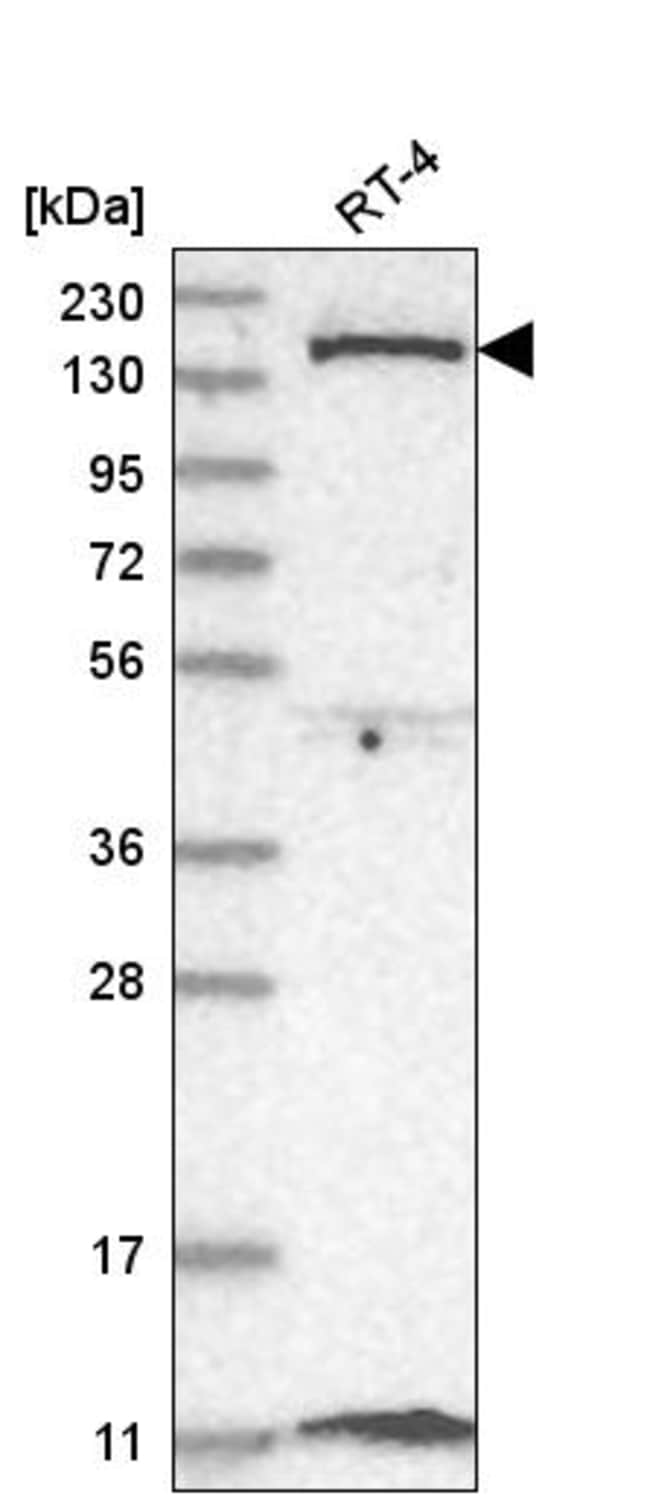
Invitrogen™ DGKD Polyclonal Antibody
Description
Immunogen sequence: TQMDQFGQAA GVLIHSIREI AQSHRDMEQE LAHAVNASSK SMDRVYGKPR TTEGLNCSFV LEMVNNFRAL RSETELLLSG KMALQLDPPQ KEQLGSALAE MDRQLRRLAD TPWLCQSAEP GDEESVMLDL A Highest antigen sequence indentity to the following orthologs: Mouse - 84%, Rat - 84%.
Diacylglycerol kinases (DGKs) phosphorylate diacylglycerol (DAG) to produce phosphatidic acid. DAG and phosphatidic acid are lipids that act as second messengers in signaling cascades. DGK-alpha influences cell activation and secretion of lethal exosomes, which in turn control cell death. DGK-beta is abundant in restricted brain regions such as the caudate putamen and olfactory tubercle. DGK-gamma encodes full-length and truncated transcripts that are present in a range of human tissues, with greatest expression observed in retina. DGK-delta is most abundant in skeletal muscle. DGK-epsilon shows specificity for arachidonylcontaining diacylglycerol and is expressed predominantly in testis. DGK-theta is most abundant in the cerebellum and hippocampus. DGK-iota is present in brain and retina as a predominant transcript of more than 12 kb, including a long 3-prime untranslated region, with additional low abundance transcripts of 9.5 and 7.5 kb. DGK-eta is closely related to DGK-delta. DGK-zeta is most abundant in brain and muscle. DGKs have structural motifs that play regulatory roles, and these motifs form the basis for dividing the DGKs into five subtypes.

Specifications
Specifications
| Antigen | DGKD |
| Applications | Western Blot, Immunocytochemistry |
| Classification | Polyclonal |
| Concentration | 0.20 mg/mL |
| Conjugate | Unconjugated |
| Formulation | PBS with 40% glycerol and 0.02% sodium azide; pH 7.2 |
| Gene | DGKD |
| Gene Accession No. | Q16760 |
| Gene Alias | 130 kDa diacylglycerol kinase; AI841987; D330025K09; DAG kinase delta; DGK delta; DGKD; dgkd-2; DGKdelta; DGK-delta; Diacylglycerol kinase delta; diacylglycerol kinase, delta; diacylglycerol kinase, delta 130kDa; Diglyceride kinase; diglyceride kinase delta; EC 2.7.1.107; FLJ26930; hypothetical protein LOC513389; KIAA0145; RGD1563309 |
| Gene Symbols | DGKD |
| Show More |
Product Title
By clicking Submit, you acknowledge that you may be contacted by Fisher Scientific in regards to the feedback you have provided in this form. We will not share your information for any other purposes. All contact information provided shall also be maintained in accordance with our Privacy Policy.
Spot an opportunity for improvement?