missing translation for 'onlineSavingsMsg'
Learn More
Learn More
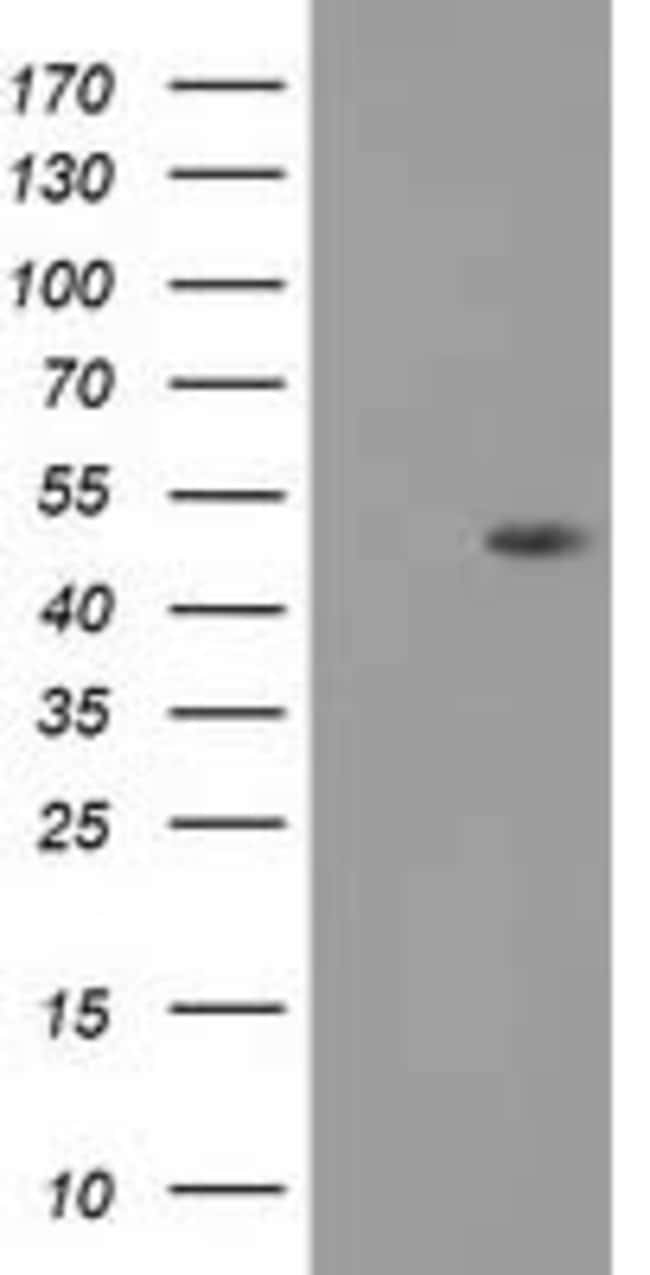
DOK2 Mouse anti-Human, Clone: OTI1G9, lyophilized, TrueMAB™

Description
Reconstitute with PBS (pH 7.3) and recommend to perform another round of desalting process using Product No. 7KMWCO
Docking proteins interact with receptor tyrosine kinases and mediate particular biological responses using signal transduction. Dok-2 acts as a multiple docking protein downstream of receptor or non-receptor tyrosine kinases. By this mechanism it acts to negatively regulate signal transduction and cell proliferation controlled by cytokines in a feedback loop. Dok-2 is highly expressed in cells and tissues of hematopoietic origin as well as in lung. Expression of bcr/abl induces additional tyrosine phosphorylation of the Dok1 and Dok2 proteins and their association with Ras-GAP. Thus, it is suspected that DOK association regulates GAP activity toward Ras and that the Dok proteins serve as mediators of bcr-abl signaling. The role of Dok proteins in bcr-abl regulation may also be implicated in chronic myelogenous leukemia (CML), which is characterized by a Philadelphia chromosome translocation t(9;22). Such a mutation would result in a p210-bcr/abl chimeric protein-tyrosine kinase which has been found in many CML cases.
Specifications
Specifications
| Antigen | DOK2 |
| Applications | Western Blot |
| Classification | Monoclonal |
| Clone | OTI1G9 |
| Conjugate | Unconjugated |
| Formulation | PBS with 8% trehalose and no preservative; pH 7.3 |
| Gene | DOK2 |
| Gene Accession No. | O60496 |
| Gene Alias | p56DOK, p56dok-2 |
| Gene Symbols | DOK2 |
| Show More |
Product Title
By clicking Submit, you acknowledge that you may be contacted by Fisher Scientific in regards to the feedback you have provided in this form. We will not share your information for any other purposes. All contact information provided shall also be maintained in accordance with our Privacy Policy.
Spot an opportunity for improvement?