missing translation for 'onlineSavingsMsg'
Learn More
Learn More
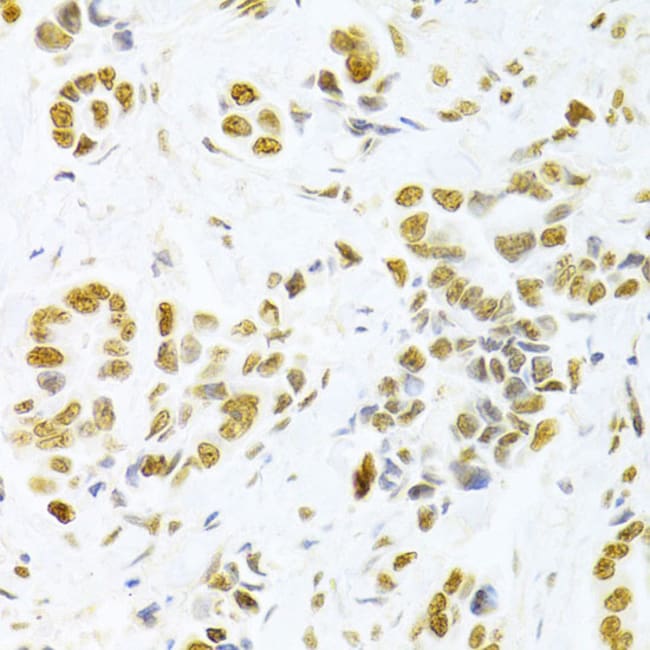
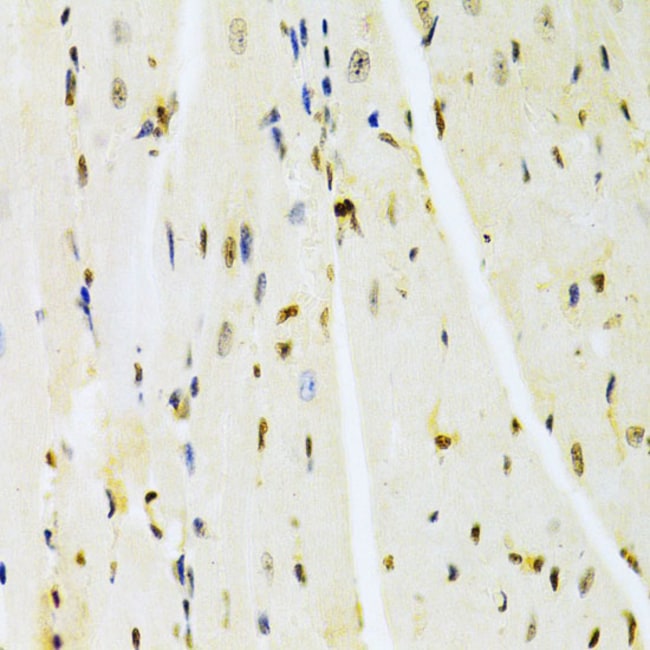
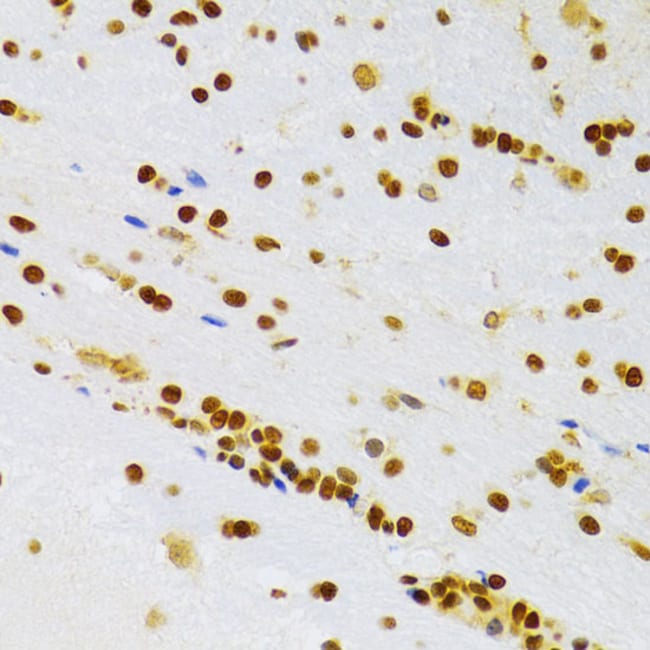
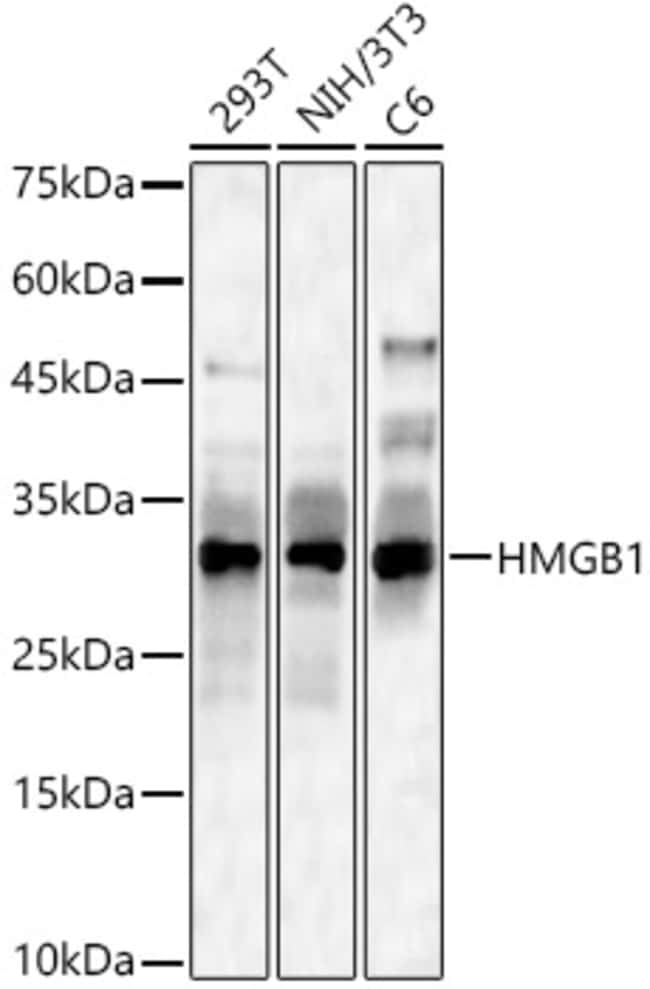
Invitrogen™ HMGB1 Polyclonal Antibody

Description
Positive Samples: 293T, MCF7, Jurkat, Mouse spleen, Mouse lung, Mouse kidney, Rat lung; Cellular Location: Cell membrane, Chromosome, Cytoplasm, Endoplasmic reticulum-Golgi intermediate compartment, Endosome, Extracellular side, Nucleus, Peripheral membrane protein Immunogen sequence: ARYEREMKTY IPPKGETKKK FKDPNAPKRP PSAFFLFCSE YRPKIKGEHP GLSIGDVAKK LGEMWNNTAA DDKQPYEKKA AKLKEKYEKD IAAYRAKGKP.
High-mobility group box 1 protein, previously known as HMG-1 or amphoterin, is a member of the high mobility group box family of non-histone chromosomal proteins. Human HMGB1 is expressed as a 30 kDa, 215 amino acid (aa) single chain polypeptide containing three domains: two N-terminal globular, 70 aa positively charged DNA-binding domains (HMG boxes A and B), and a negatively charged 30 aa C-terminal region that contains only Asp and Glu. HMGB1 is expressed at high levels in almost all cells. It was originally discovered as a nuclear protein that could bend DNA. Such bending stabilizes nucleosome formation and regulates the expression of select genes upon recruitment by DNA binding proteins. It is now known that HMGB1 can also act extracellularly, both as an inflammatory mediator that promotes monocyte migration and cytokine secretion, and as a mediator of T cell-dendritic cell interaction. Moreover, HMGB1 is reported that the level of HMGB1 is elevated during sterile tissue injury, infection, lethal endotoxemia or sepsis, collagen-induced arthritis, and ischemia-reperfusion induced tissue injury.

Specifications
Specifications
| Antigen | HMGB1 |
| Applications | ELISA, Immunohistochemistry (Paraffin), Western Blot |
| Classification | Polyclonal |
| Concentration | 1.16 mg/mL |
| Conjugate | Unconjugated |
| Formulation | PBS with 50% glycerol and 0.0\1% thimerosal; pH 7.3 |
| Gene | Hmgb1 |
| Gene Accession No. | P09429, P63158, P63159 |
| Gene Alias | Ac2-008; amphoterin; Amphoterin antibody; DEF; DKFZp686A04236; Heparin-binding protein p30; high mobility group 1; high mobility group 1 protein; high mobility group box 1; high mobility group protein 1; High mobility group protein B1; high mobility group protein HMG1; high-mobility group (nonhistone chromosomal) protein 1; high-mobility group box 1; high-mobility-group protein; Hmg1; HMG-1; HMG3; HMG3 antibody; hmgb 1; HMGB1; hmgb-1; HMGB1 protein; hypothetical protein; non-histone protein HMG1; p30; RCJMB04_15a21; RP11-550P23.1; SBP-1; Sulfoglucuronyl carbohydrate binding protein; unnamed protein product |
| Gene Symbols | Hmgb1 |
| Show More |
Product Title
By clicking Submit, you acknowledge that you may be contacted by Fisher Scientific in regards to the feedback you have provided in this form. We will not share your information for any other purposes. All contact information provided shall also be maintained in accordance with our Privacy Policy.
Spot an opportunity for improvement?