missing translation for 'onlineSavingsMsg'
Learn More
Learn More
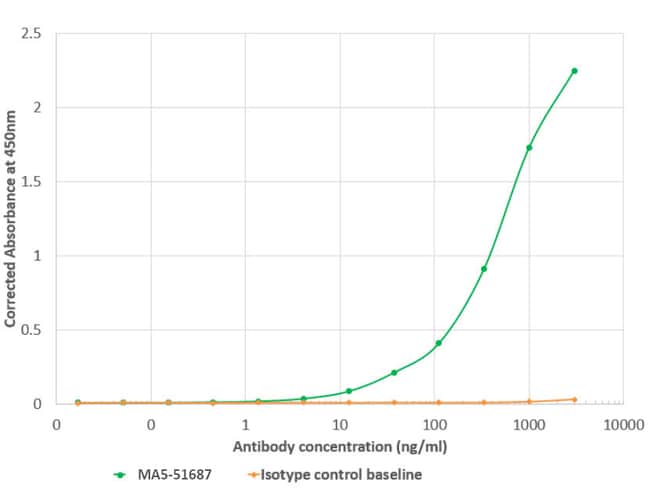
Invitrogen™ Influenza A H5N1 HA Chimeric Recombinant Rabbit Monoclonal Antibody (310-18A3)

Description
This antibody is specific for the H5N1 and H1N1 subtypes of influenza A virus. Influenza viruses are negative-sense, single-stranded, segmented RNA viruses.
Influenza A virus is a major public health threat, killing more than 30,000 people per year in the USA. In early 2009, a novel swine-origin influenza A (H1N1) virus was identified in specimens obtained from patients in Mexico and the United States. The virus spread quickly around the world and on June 11, 2009, the World Health Organization declared it a pandemic. Influenza A virus has one of sixteen possible Hemagglutinin (HA) surface proteins and one of nine possible Neuraminidase (NA) surface proteins. The Hemagglutinin protein facilitates viral attachment while Neuraminidase is involved in viral release. These proteins also elicit immune responses that prevent infection or independently reduce viral replication. The genetic make-up of this swine flu virus is unlike any other: it is an H1N1 strain that combines a triple assortment first identified in 1998 including human, swine, and avian influenza with two new pig H3N2 virus genes from Eurasia, themselves of recent human origin. The distinct antigenic properties of the new swine influenza virus compared with seasonal influenza A (H1N1) virus suggest that human immunity against new swine influenza virus is limited, although the age distribution of reported cases suggests some degree of protection in older age groups.

Specifications
Specifications
| Antigen | Influenza A H5N1 HA Chimeric |
| Applications | ELISA, Functional Assay |
| Classification | Recombinant Monoclonal |
| Clone | 310-18A3 |
| Concentration | 1 mg/mL |
| Conjugate | Unconjugated |
| Formulation | PBS with 0.02% ProClin 300 |
| Gene Alias | flu hemagglutinin; influenza hemagglutinin |
| Host Species | Rabbit |
| Immunogen | This antibody was raised by cloning antibody sequences form B cells isolated from people immunized with the H5 DNA vaccine. |
| Show More |
Product Title
By clicking Submit, you acknowledge that you may be contacted by Fisher Scientific in regards to the feedback you have provided in this form. We will not share your information for any other purposes. All contact information provided shall also be maintained in accordance with our Privacy Policy.
Spot an opportunity for improvement?