missing translation for 'onlineSavingsMsg'
Learn More
Learn More

This item is not returnable.
View return policy
Description
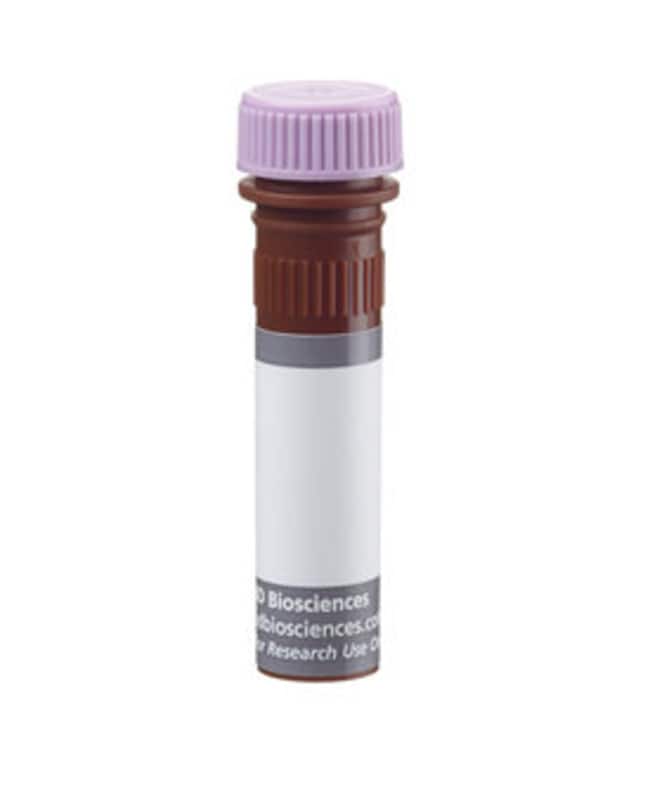
The 4E5 monoclonal antibody specifically recognizes Ly-49D, which is expressed on subsets of natural killer (NK) cells in C57BL/6, C3H/He (at a very low frequency), and SJL, but not DBA/2, AKR, CBA/J, or BALB/c mice. Unlike Ly-49D antigen has not been betected on NK-1.1+ (or DX5+) T cells. In 129/J mice, the 4E5 antibody cross-reacts with Ly-49O, Ly-49R, and Ly-49V. The Ly-49 family of NK-cell receptors, members of the C-type lectin superfamily, are disulfide-linked type-II transmembrane protein homodimers with extracellular carbohydrate-recognition domains, which bind to MHC class I alloantigens. The Ly-49 family members are expressed independently, such that an individual NK or T cell may display more than one class of Ly-49 receptor homodimers. Ly-49D weakly binds to MHC class I antigens of the k halpotype, and Ly-49D+ IL-2-activated NK cells lyse target cells expressing H-2[a], H-2[b], H-2[d], H-2[k], H-2[p], H-2[q], and H-2[s] and the CHO (Chinese hamster ovary) cell line. Ly-49D+ cells mediate allogenic resistance to H-2d bone marrow transplantation. In vitrostudies suggest that the Ly-49D receptor mediates activation of NK-cell cytolytic activity via tyrosine phosphorylation of their ITIMs ( Immunoreceptor Tyrosine-based Inhibitory Motifs). Molecular differences between the Ly-49D stimulatory receptor and the inhibitory members of the Ly-49 family include the absence of an ITIM in Ly-49D, the lack of phosphorylation of Ly-49D in activated NK cells, and the association of a novel tyrosine-phosphorylated protein (pp16) with Ly-49D in activated NK cells. Ly-49O and Ly-49V are closely related to Ly-49A[B6] and, like Ly-49A, have ITIM domains. Ly-49O- and Ly-49V-transfected 293T (human kidney epithelial) cells bind tetramers of H-2D[b], D[b], D[k], and L[d]. In addition, the Ly-49V-transfected cells also bind K[b], K[d], and K[k]. Ly-49R is closely related to Ly-49D[B6] and is putative activating receptor due to its lack of an ITIM domain. Ly-49R-transfected 293T cells bind soluble tetramers of H-2D[b], D[d], D[k], and L[d].The antibody was conjugated to BD Horizon™ BUV395 which is part of the BD Horizon Brilliant™ Ultraviolet family of dyes. This dye has been exclusively developed by BD Biosciences to have minimal spillover into other detectors, making it an optimal choice for multicolor flow cytometry. With an Ex Max at 348 nm and an Em Max at 395 nm, BD Horizon BUV395 can be excited with a 355 nm laser and detected with a 379/28 filter. BUV395 is a UV-excitable dye that has been developed exclusively by BD Biosciences. With an excitation max of 348 nm and emission max of 395 nm, BUV395 can be excited by the 355nm laser and detected in a 379/28 filter. This dye is optimal for multicolor flow cytometry because it has little to no spillover into other detectors.
Specifications
| Ly-49D | |
| 4E5. | |
| Brilliant Ultraviolet 395 | |
| Ly49d, Ly-49d, Klra4, Chok | |
| Not Reported | |
| 50 μg | |
| Primary | |
| Store undiluted at 4°C and protected from prolonged exposure to light. Do not freeze. |
| Monoclonal | |
| 0.2mg/mL | |
| Aqueous buffered solution containing ≤0.09% sodium azide. | |
| Rat | |
| Affinity Purified | |
| RUO | |
| Mouse | |
| IgG2a κ |
Product Content Correction
Your input is important to us. Please complete this form to provide feedback related to the content on this product.
Product Title
Spot an opportunity for improvement?Share a Content Correction