missing translation for 'onlineSavingsMsg'
Learn More
Learn More
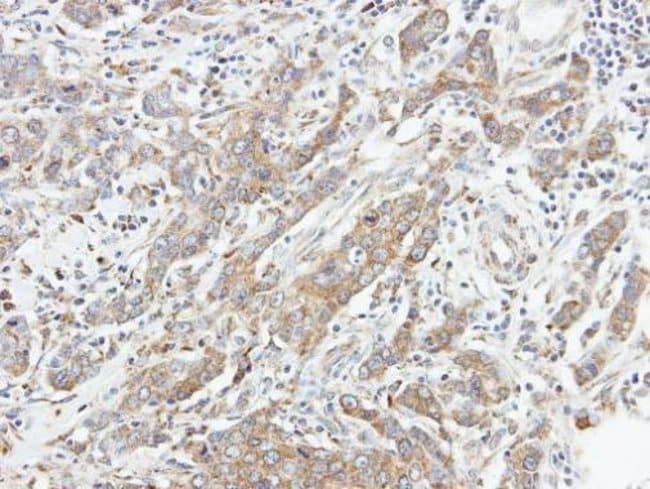
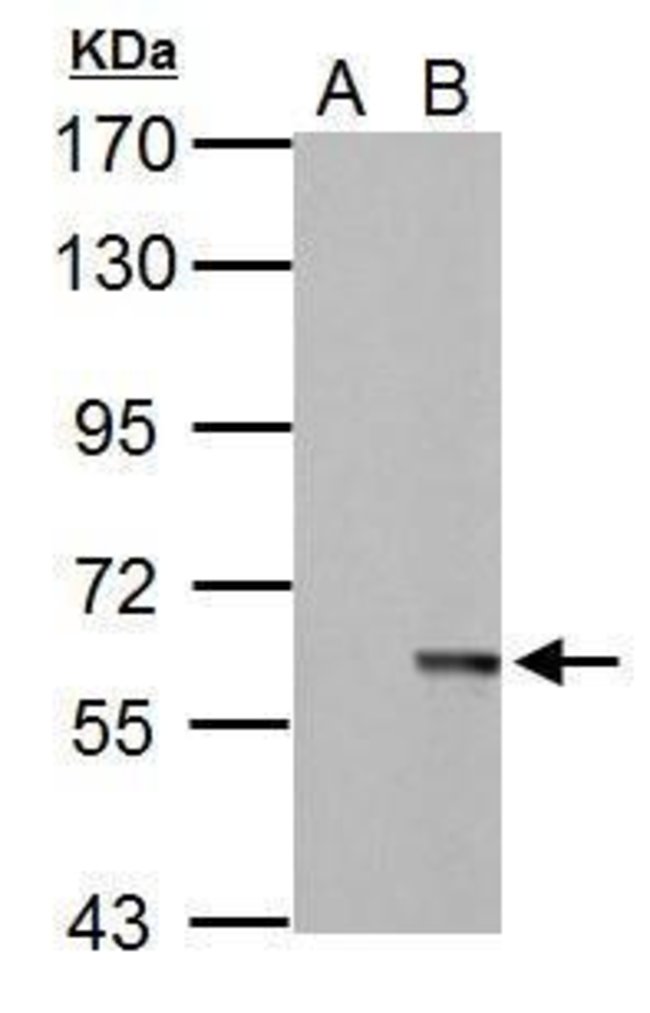
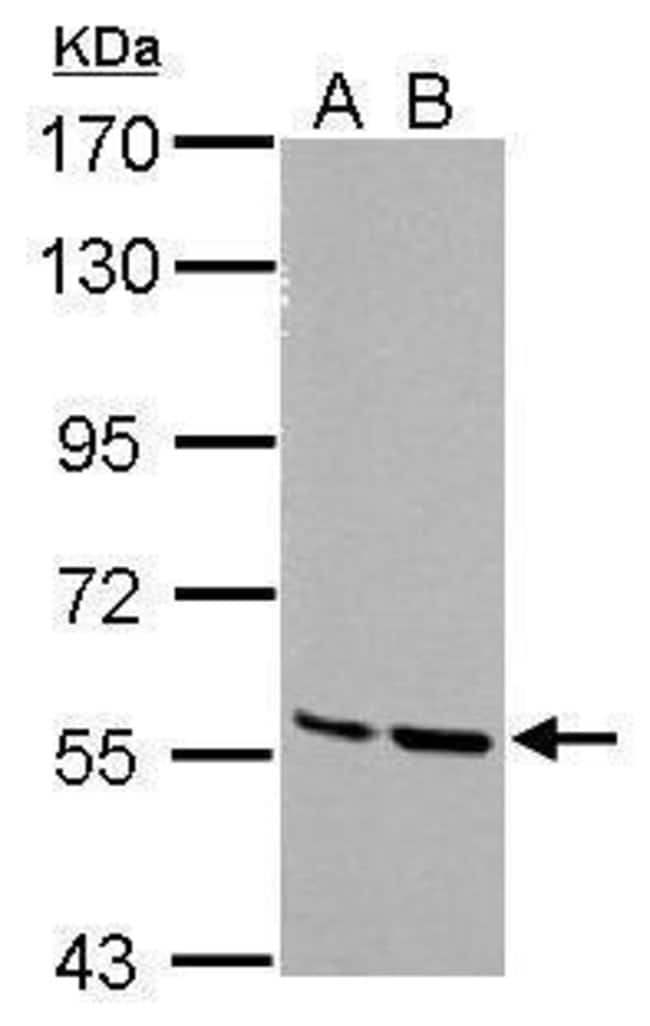
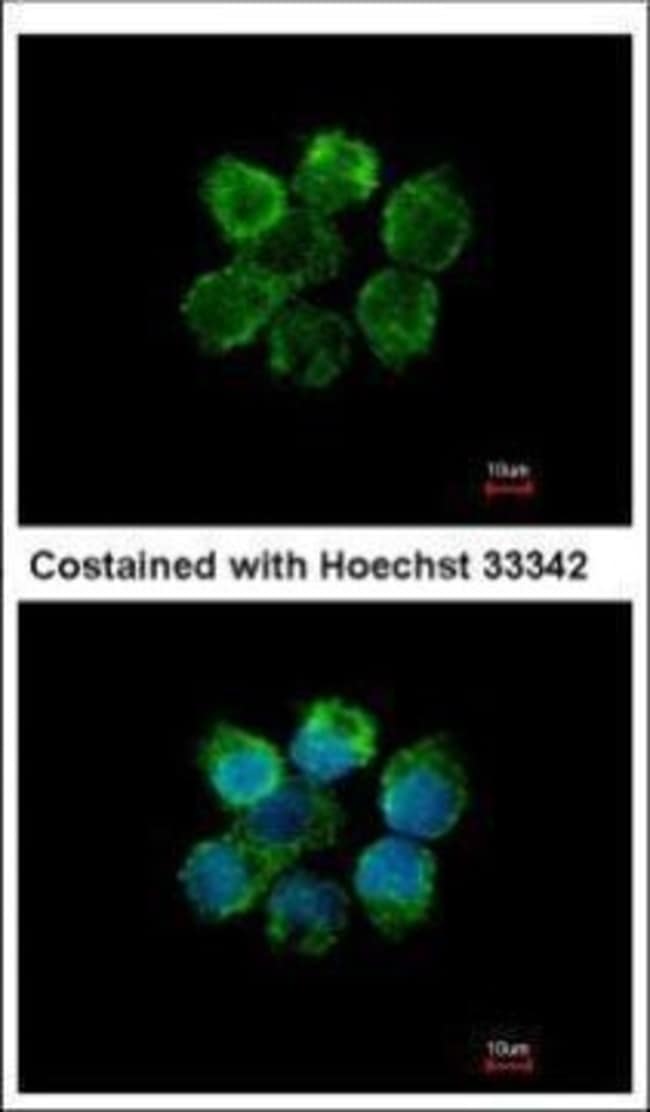
Invitrogen™ MST2 Polyclonal Antibody

Description
Recommended positive controls: 293T transfected STK3, , NIH-3T3, JC. Predicted reactivity: Mouse (99%), Rat (99%), Zebrafish (98%), Xenopus laevis (98%), Chicken (99%), Rhesus Monkey (99%), Bovine (99%). Store product as a concentrated solution. Centrifuge briefly prior to opening the vial.
STK3 (MST2) is a STE kinase family member that acts upstream of the MAP kinase signaling pathways, and is known to be activated by the proapoptotic stimuli staurosporine and FAS ligand. STK3 is a stress-activated, pro-apoptotic kinase which, following caspase-cleavage, enters the nucleus and induces chromatin condensation followed by internucleosomal DNA fragmentation. It is a key component of the Hippo signaling pathway which plays a pivotal role in organ size control and tumor suppression by restricting proliferation and promoting apoptosis. The core of this pathway is composed of a kinase cascade wherein STK3/MST2 and STK4/MST1, in complex with its regulatory protein SAV1, phosphorylates and activates LATS1/2 in complex with its regulatory protein MOB1, which in turn phosphorylates and inactivates YAP1 oncoprotein and WWTR1/TAZ. Phosphorylation of YAP1 by LATS2 inhibits its translocation into the nucleus to regulate cellular genes important for cell proliferation, cell death, and cell migration. STK3/MST2 and STK4/MST1 are required to repress proliferation of mature hepatocytes, to prevent activation of facultative adult liver stem cells (oval cells), and to inhibit tumor formation.

Specifications
Specifications
| Antigen | MST2 |
| Applications | Immunohistochemistry (Paraffin), Western Blot, Immunocytochemistry |
| Classification | Polyclonal |
| Concentration | 0.84 mg/mL |
| Conjugate | Unconjugated |
| Formulation | 0.1M tris glycine with 10% glycerol and 0.01% thimerosal; pH 7 |
| Gene | STK3 |
| Gene Accession No. | Q13188, Q9JI10 |
| Gene Alias | 0610042I06Rik; KB-1458E12.1; KRS1; Mammalian STE20-like protein kinase 2; mess1; MST; Mst2; MST-2; MST2/C; MST2/N; Mst3; protein kinase homolog; serine/threonine kinase 3; serine/threonine kinase 3 (STE20 homolog, yeast); serine/threonine kinase 3 (Ste20, yeast homolog); serine/threonine-protein kinase 3; Serine/threonine-protein kinase 3 20kDa subunit; Serine/threonine-protein kinase 3 36kDa subunit; Serine/threonine-protein kinase Krs-1; Ste20; STE20-like kinase MST2; STK3; wu:fc19e11; zgc:55383 |
| Gene Symbols | STK3 |
| Show More |
Product Title
By clicking Submit, you acknowledge that you may be contacted by Fisher Scientific in regards to the feedback you have provided in this form. We will not share your information for any other purposes. All contact information provided shall also be maintained in accordance with our Privacy Policy.
Spot an opportunity for improvement?