missing translation for 'onlineSavingsMsg'
Learn More
Learn More
Invitrogen™ Nectin 3 Polyclonal Antibody

Description
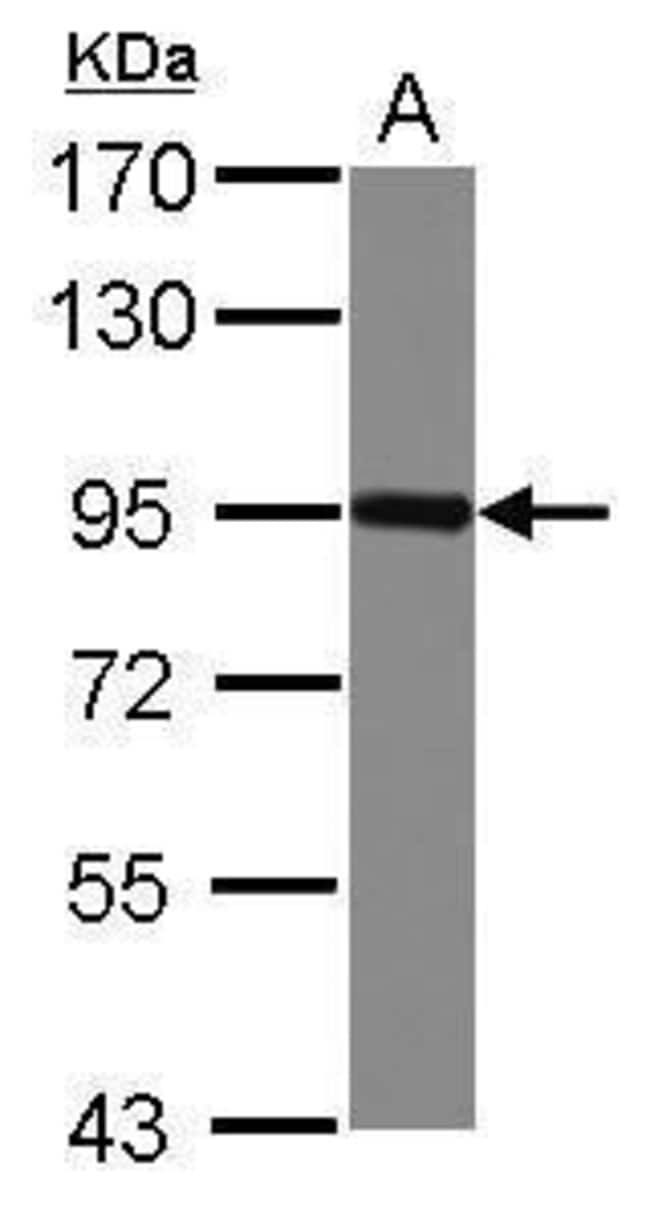
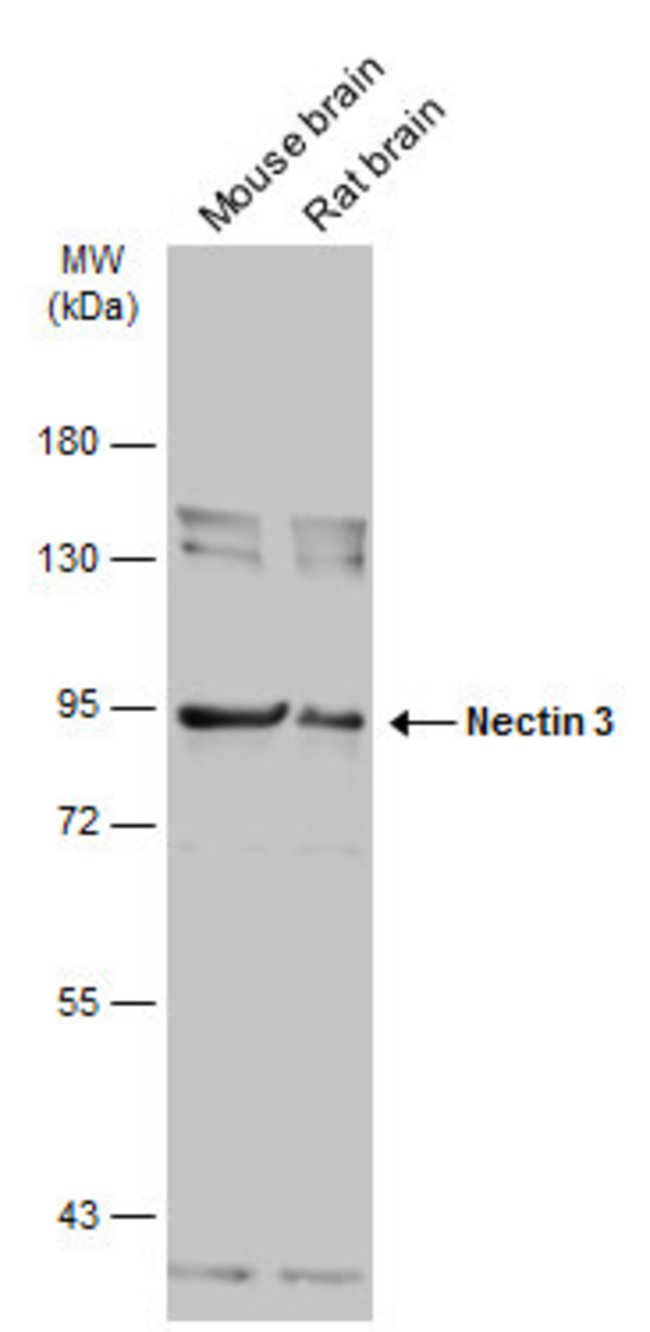
Recommended positive controls: K562, THP-1, mouse brain, rat brain. Predicted reactivity: Mouse (95%), Rat (94%). Store product as a concentrated solution. Centrifuge briefly prior to opening the vial.
Nectin-3 is a 83 kDa type I transmembrane glycoprotein. Nectin, originally isolated as poliovirus receptor-related protein (PRR), is a cell-cell adhesion molecule of the immunoglobulin supergene family. Nectins are calciumindependent immunoglobulin-like cell-cell adhesion molecules consisting of four members, nectin 1-4. Nectins homophilically and heterophilically trans-interact to form a variety of cell-cell junctions, including cadherin-based adherens junctions in epithelial cells and fibroblasts in culture, synaptic junctions in neurons, and Sertoli cell-spermatid junctions in testis, in cooperation with, or independently of, cadherins. Both nectin-2 and nectin-3 are ubiquitously expressed, whereas nectin-1 is abundantly expressed in brain. Nectin-2 and -3 are expressed in cells where cadherin is not expressed, such as blood cells and spermatids. All members of the nectin family have two or three splice variants. For nectin-3, three isoforms exist: nectin-3 alpha, -3 beta and -3 gamma, of which nectin-3 alpha is the largest. Nectin-3, also known as PRR3, is a transmembrane protein that is predominantly expressed in testis and placental tissues as well in many cell lines. Nectin interacts in vivo with both long and short isoforms of afadin, an actin binding protein, at cadherin-based cell-cell adherence junctions in various tissues and cell lines. Furthermore, the ectodomains of nectin-3 and CD155 (Poliovirus Receptor) have shown strong affinity to each other. Injection of antibody 103-A1 into lumen of seminiferous tubules leads to disruption of the actin filaments in Sertoli cells at the Sertoli-maturing spermatid ectoplasmic specialization and exfoliation of maturing spermatids form the seminiferous epithelium.

Specifications
Specifications
| Antigen | Nectin 3 |
| Applications | Western Blot |
| Classification | Polyclonal |
| Concentration | 1 mg/mL |
| Conjugate | Unconjugated |
| Formulation | 0.1M tris glycine with 10% glycerol and 0.01% thimerosal; pH 7 |
| Gene | NECTIN3 |
| Gene Accession No. | Q9JLB9, Q9NQS3 |
| Gene Alias | 2610301B19Rik; 3000002N23Rik; 4921513D19Rik; AA407785; AU016832; AW538082; CD113; CDW113; DKFZP566B0846; FLJ90624; nectin 3; nectin cell adhesion molecule 3; Nectin3; Nectin-3; poliovirus receptor-related 3; poliovirus receptor-related protein 3; PPR3; PRR3; PVRL3; PVRR3 |
| Gene Symbols | NECTIN3 |
| Show More |
Product Title
By clicking Submit, you acknowledge that you may be contacted by Fisher Scientific in regards to the feedback you have provided in this form. We will not share your information for any other purposes. All contact information provided shall also be maintained in accordance with our Privacy Policy.
Spot an opportunity for improvement?