missing translation for 'onlineSavingsMsg'
Learn More
Learn More
Invitrogen™ Opsin 3 Polyclonal Antibody

Description
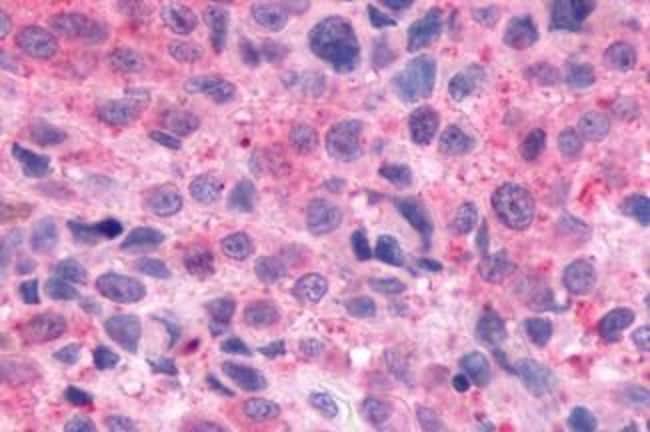
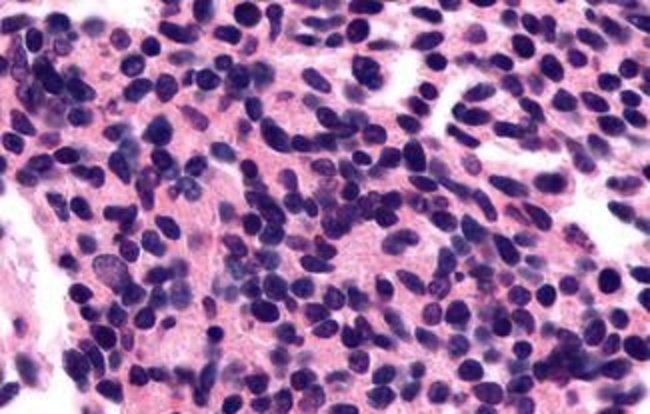
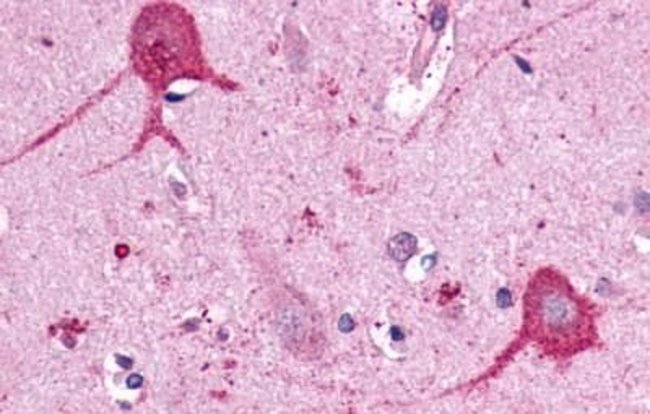
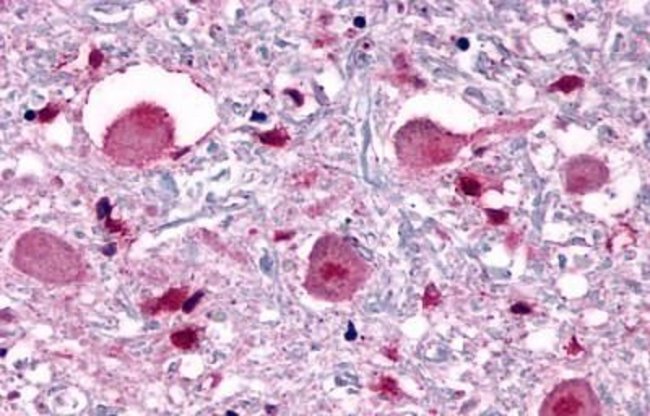
PA1-32531 detects Encephalopsin from human samples.
Opsins are members of the guanine nucleotide-binding protein (G protein)-coupled receptor superfamily. In addition to the visual opsins, mammals possess several photoreceptive non-visual opsins that are expressed in extraocular tissues. This gene, opsin 3, is strongly expressed in brain and testis and weakly expressed in liver, placenta, heart, lung, skeletal muscle, kidney, and pancreas. The gene may also be expressed in the retina. The protein has the canonical features of a photoreceptive opsin protein. May play a role in encephalic photoreception. Strongly expressed in brain. Highly expressed in the preoptic area and paraventricular nucleus of the hypothalamus. Shows highly patterned expression in other regions of the brain, being enriched in selected regions of the cerebral cortex, cerebellar Purkinje cells, a subset of striatal neurons, selected thalamic nuclei, and a subset of interneurons in the ventral horn of the spinal cord.

Specifications
Specifications
| Antigen | Opsin 3 |
| Applications | Immunohistochemistry (Paraffin) |
| Classification | Polyclonal |
| Concentration | 1 mg/mL |
| Conjugate | Unconjugated |
| Formulation | PBS with 0.1% sodium azide |
| Gene | Opn3 |
| Gene Accession No. | Q9H1Y3 |
| Gene Alias | ECPN; Encephalopsin; ERO; NMO-1; Opn3; opsin (encephalopsin); opsin 3; opsin 3 (encephalopsin, panopsin); opsin-3; Panopsin; PPP1R116; protein phosphatase 1, regulatory subunit 116 |
| Gene Symbols | Opn3 |
| Show More |
Product Title
By clicking Submit, you acknowledge that you may be contacted by Fisher Scientific in regards to the feedback you have provided in this form. We will not share your information for any other purposes. All contact information provided shall also be maintained in accordance with our Privacy Policy.
Spot an opportunity for improvement?