missing translation for 'onlineSavingsMsg'
Learn More
Learn More
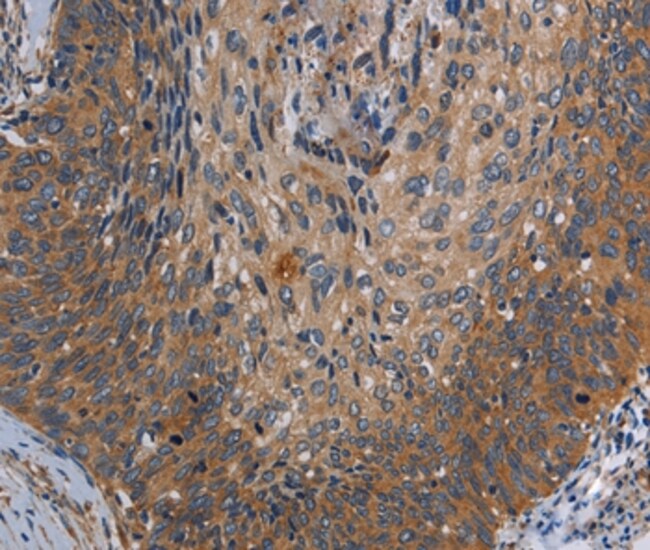
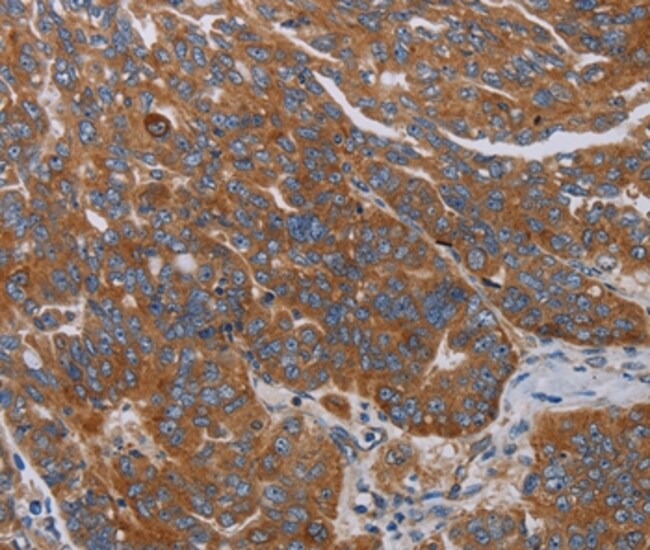
Invitrogen™ PARP10 Polyclonal Antibody

Description
The antibody detects endogenous levels of total PARP10 protein.
Poly(ADP-ribose) polymerases (PARPs), such as PARP10, regulate gene transcription by altering chromatin organization by adding ADP-ribose to histones. PARPs can also function as transcriptional cofactors. Poly(ADP-ribose) polymerases (PARPs), such as PARP10, regulate gene transcription by altering chromatin organization by adding ADP-ribose to histones. PARPs can also function as transcriptional cofactors (Yu et al., 2005).

Specifications
Specifications
| Antigen | PARP10 |
| Applications | Immunohistochemistry (Paraffin) |
| Classification | Polyclonal |
| Concentration | 1.8 mg/mL |
| Conjugate | Unconjugated |
| Formulation | PBS with 40% glycerol and 0.05% sodium azide; pH 7.4 |
| Gene | PARP10 |
| Gene Accession No. | Q53GL7 |
| Gene Alias | ADP-ribosyltransferase diphtheria toxin-like 10; ARTD10; FLJ14464; LOC102548778; Parp10; PARP-10; poly (ADP-ribose) polymerase family, member 10; poly [ADP-ribose] polymerase 10; poly [ADP-ribose] polymerase 10-like; poly(ADP-ribose) polymerase family member 10; Protein mono-ADP-ribosyltransferase PARP10 |
| Gene Symbols | PARP10 |
| Show More |
Product Title
By clicking Submit, you acknowledge that you may be contacted by Fisher Scientific in regards to the feedback you have provided in this form. We will not share your information for any other purposes. All contact information provided shall also be maintained in accordance with our Privacy Policy.
Spot an opportunity for improvement?