missing translation for 'onlineSavingsMsg'
Learn More
Learn More
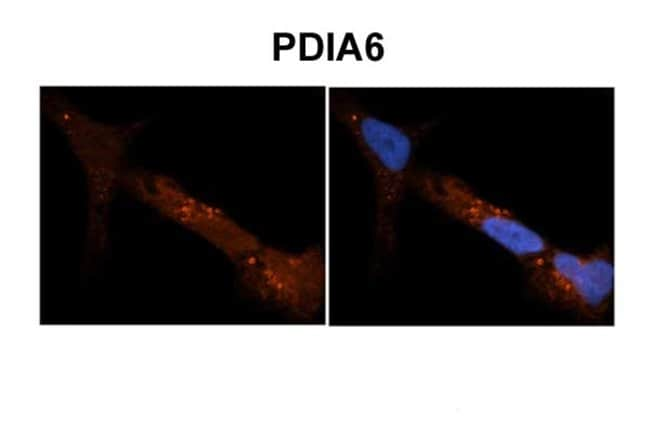
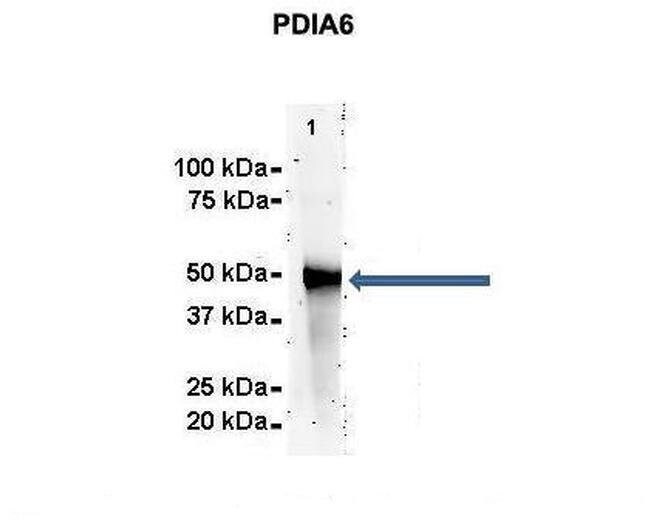
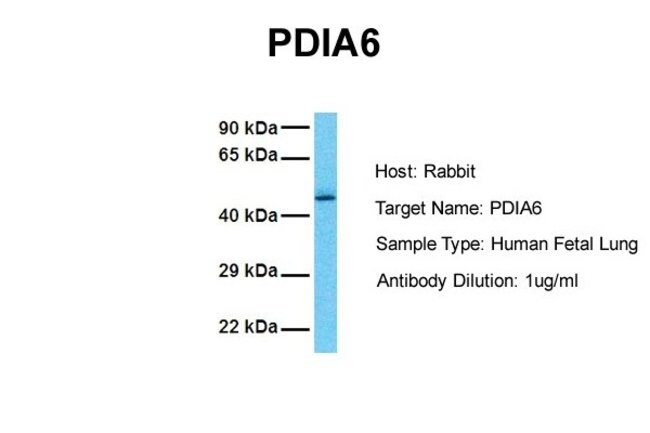
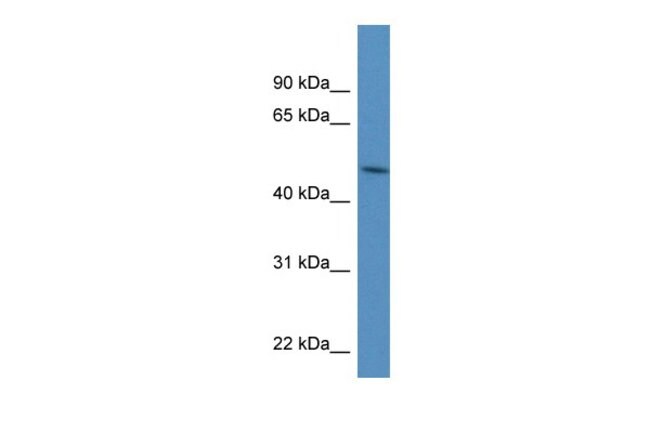
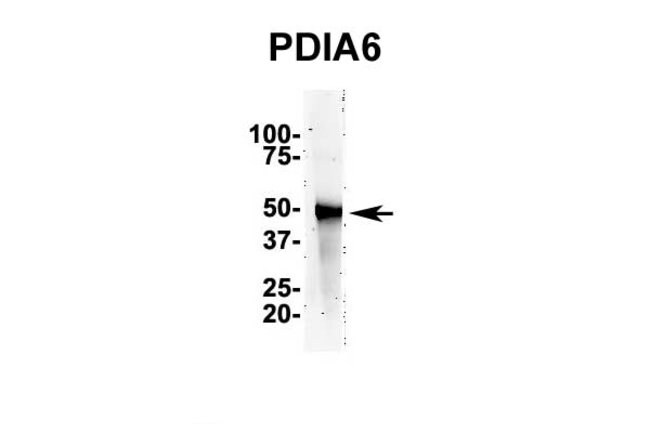
Invitrogen™ PDIA6 Polyclonal Antibody

Rabbit Polyclonal Antibody
Brand: Invitrogen™ PA569817
This item is not returnable.
View return policy
Description
This target displays homology in the following species: Cow: 86%; Dog: 93%; Horse: 100%; Human: 100%; Mouse: 100%; Pig: 93%; Rabbit: 79%; Rat: 100%.
P5 is a novel protein that was originally identified in humans. Functionally, P5 has been shown to have peptide binding ability and chaperone activity specific to certain proteins. P5 shares several structural similarities to PDI, an important protein of the ER. The deduced amino acid sequence of P5 shows that it contains the ER retention signal KDEL. P5 also contains two CXXC-like motifs, a motif responsible for oxidoreductase activity. These two CXXC motifs are found on the N- and C-terminus of the protein, one at each end. Studies suggest that the N-terminal CXXC motif is more important than the second for isomerase activity. Contrary to most of the PDI-like proteins, P5 is not stress-inducible.
Specifications
| PDIA6 | |
| Polyclonal | |
| Unconjugated | |
| PDIA6 | |
| 1700015E05Rik; AL023058; C77895; CaBP1; CaBP5; Calcium-binding protein 1; endoplasmic reticulum protein 5; ER protein 5; ERP5; P5; PDIA6; pdi-p5; protein disulfide isomerase A6; protein disulfide isomerase associated 6; protein disulfide isomerase family A member 6; protein disulfide isomerase family A, member 6; protein disulfide isomerase P5; protein disulfide isomerase-associated 6; protein disulfide isomerase-related protein; protein disulfide-isomerase A6; thioredoxin domain containing 7; thioredoxin domain containing 7 (protein disulfide isomerase); thioredoxin domain-containing protein 7; TXNDC7 | |
| Rabbit | |
| Affinity chromatography | |
| RUO | |
| 10130, 71853 | |
| -20°C, Avoid Freeze/Thaw Cycles | |
| Liquid |
| Immunohistochemistry, Western Blot | |
| 0.5 mg/mL | |
| PBS with 2% sucrose and 0.09% sodium azide | |
| Q15084, Q922R8 | |
| PDIA6 | |
| synthetic peptide directed towards the N terminal region of human PDIA6. | |
| 100 μL | |
| Primary | |
| Human, Mouse | |
| Antibody | |
| IgG |
Product Content Correction
Your input is important to us. Please complete this form to provide feedback related to the content on this product.
Product Title
Spot an opportunity for improvement?Share a Content Correction