missing translation for 'onlineSavingsMsg'
Learn More
Learn More
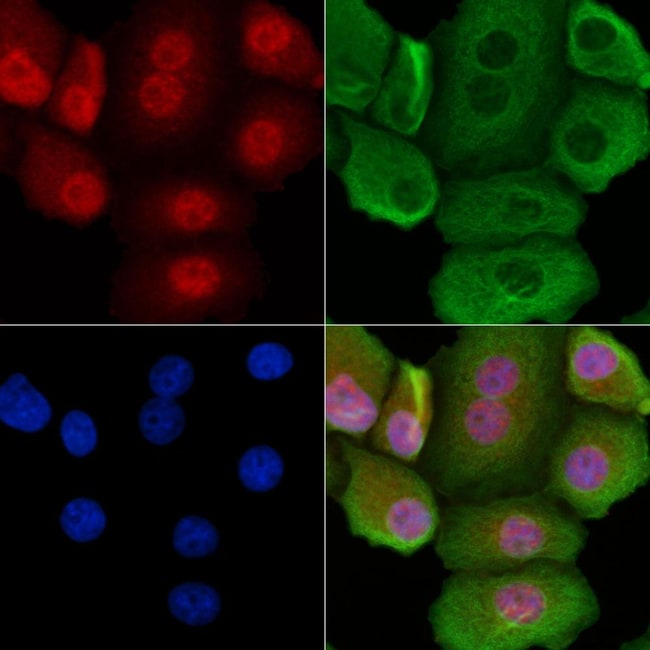
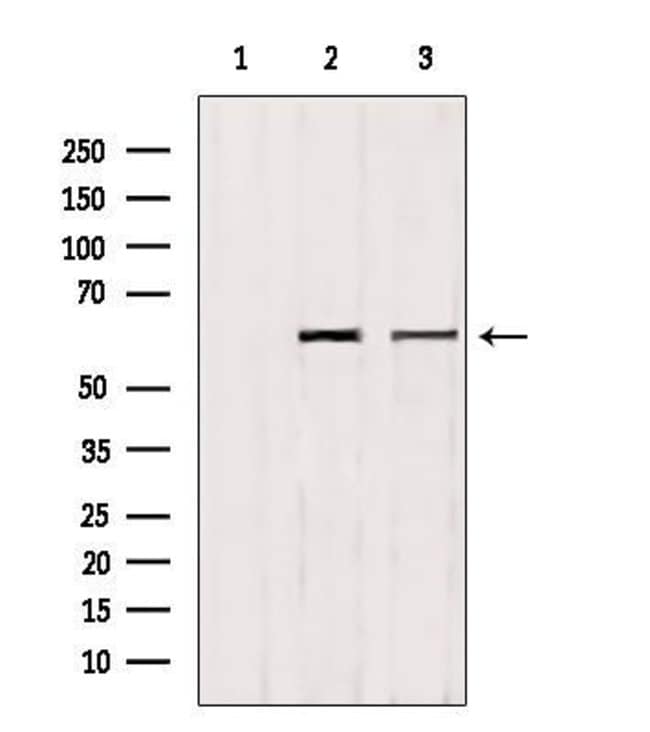
Invitrogen™ Phospho-PTRF (Tyr156) Polyclonal Antibody

Description
Antibody detects endogenous levels of PTRF only when phosphorylated at Tyr156.
The polymerase I and transcript release factor (PTRF) enables the dissociation of paused ternary polymerase I transcription complexes from the 3' end of pre-rRNA transcripts, regulating rRNA transcription by promoting the dissociation of transcription complexes and the re-initiation of polymerase I on nascent rRNA transcripts. PTRF also localizes to caveolae at the plasma membrane and is thought to play a critical role in the formation of caveolae and the stabilization of caveolins, translocating from caveolae to the cytoplasm after insulin stimulation. PTRF is also thought to modify lipid metabolism and insulin-regulated gene expression. Mutations in this gene result in a disorder characterized by generalized lipodystrophy and muscular dystrophy.

Specifications
Specifications
| Antigen | Phospho-PTRF (Tyr156) |
| Applications | Western Blot, Immunocytochemistry |
| Classification | Polyclonal |
| Concentration | 1 mg/mL |
| Conjugate | Unconjugated |
| Formulation | PBS with 50% glycerol and 0.02% sodium azide; pH 7.4 |
| Gene | CAVIN1 |
| Gene Accession No. | O54724, P85125, Q6NZI2 |
| Gene Alias | 2310075E07Rik; AW546441; caveolae associated protein 1; caveolae-associated protein 1; CAVIN; CAVIN1; cavin-1; Cav-p60; CGL4; FKSG13; FLJ90031; Polymerase I and transcript release factor; PTRF; ptrf {ECO:0000312; RGD:1307685}; RNA polymerase I and transcript release factor; TTF-I interacting peptide 12 |
| Gene Symbols | CAVIN1 |
| Show More |
Product Title
By clicking Submit, you acknowledge that you may be contacted by Fisher Scientific in regards to the feedback you have provided in this form. We will not share your information for any other purposes. All contact information provided shall also be maintained in accordance with our Privacy Policy.
Spot an opportunity for improvement?