missing translation for 'onlineSavingsMsg'
Learn More
Learn More
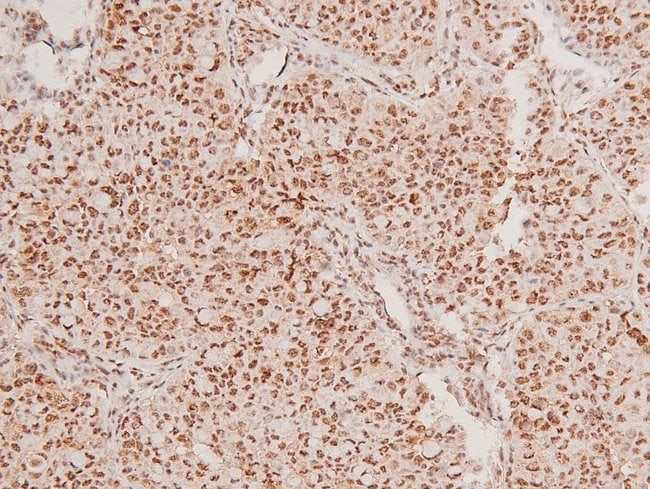
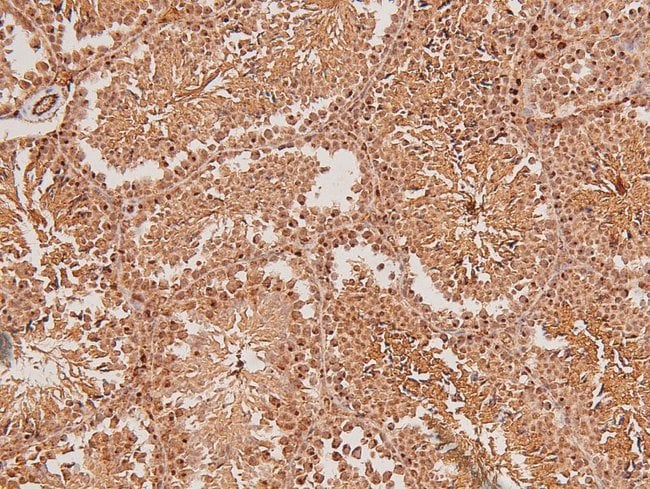
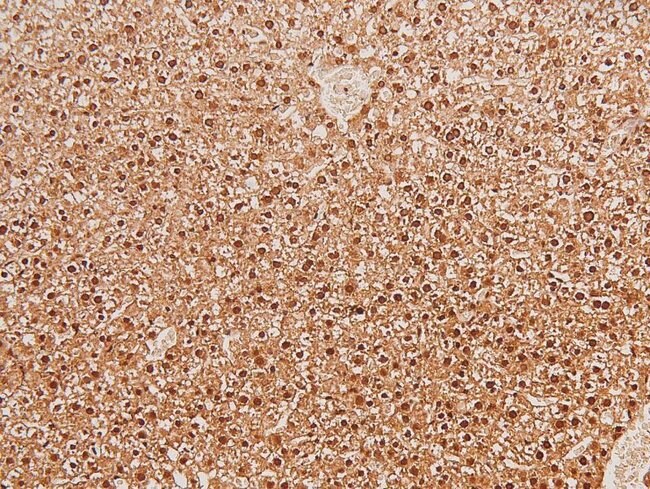
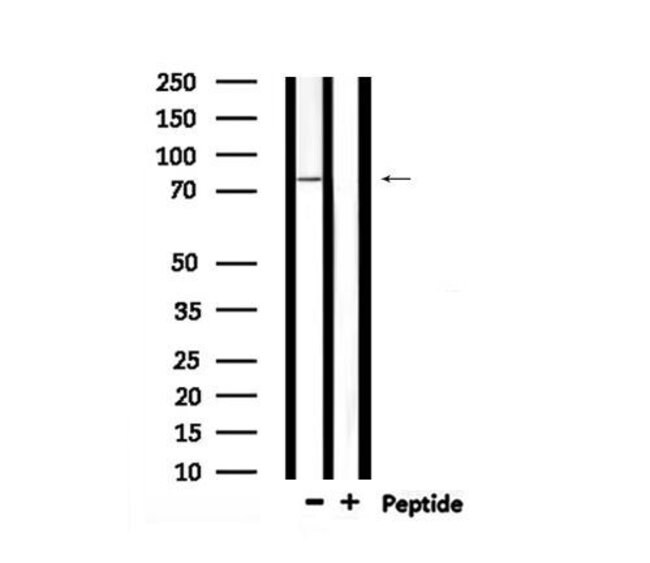
Invitrogen™ Phospho-SIK1 (Thr182) Polyclonal Antibody

Description
Antibody detects endogenous levels of SIK only when phosphorylated at Thr182.
SIK1 may mediate the physiological effects of LKB1, including its tumor suppressor function. SIK1 is also involved in signaling by various proteins like STRAD, NUAK1, NUAK2, BRSK1, BRSK2, QIK, QSK, SIK, MARK1, MARK2, MARK3, MARK4, and MELK that are related to AMPK. Activation of SIK1 by phosphorylation on thr322 can lead to an increase in the catalytic activity of sodium/potassium ATPase alpha subunit at the plasma membrane. This results in an increase in intracellular sodium in intact mammalian cells. The family has been classified in 8 major groups based on sequence comparison of their tyrosine (PTK) or serine/threonine (STK) kinase catalytic domains. The STE group (homologs of yeast Sterile 7, 11, 20 kinases) consists of 50 kinases related to the mitogen-activated protein kinase (MAPK) cascade families (Ste7/MAP2K, Ste11/MAP3K, and Ste20/MAP4K). MAP kinase cascades, consisting of a MAPK and one or more upstream regulatory kinases (MAPKKs) have been best characterized in the yeast pheromone response pathway. Pheromones bind to Ste cell surface receptors and activate yeast MAPK pathway.

Specifications
Specifications
| Antigen | Phospho-SIK1 (Thr182) |
| Applications | Immunohistochemistry (Paraffin), Western Blot |
| Classification | Polyclonal |
| Concentration | 1 mg/mL |
| Conjugate | Unconjugated |
| Formulation | PBS with 50% glycerol and 0.02% sodium azide; pH 7.4 |
| Gene | SIK1 |
| Gene Accession No. | P57059, Q60670, Q9R1U5 |
| Gene Alias | EIEE30; HRT-20; Kid2; MSK; Myocardial SNF1-like kinase; Probable serine/threonine protein kinase SNF1LK (HRT-20) (Myocardial SNF1-like kinase); protein kinase KID2; salt inducible kinase 1; salt-inducible kinase 1; salt-inducible protein kinase 1; serine/threonine protein kinase; serine/threonine-protein kinase SIK1; Serine/threonine-protein kinase SNF1-like kinase 1; serine/threonine-protein kinase SNF1LK; SIK; Sik1; SIK-1; SNF1-like kinase; SNF1LK |
| Gene Symbols | SIK1 |
| Show More |
Product Title
By clicking Submit, you acknowledge that you may be contacted by Fisher Scientific in regards to the feedback you have provided in this form. We will not share your information for any other purposes. All contact information provided shall also be maintained in accordance with our Privacy Policy.
Spot an opportunity for improvement?