missing translation for 'onlineSavingsMsg'
Learn More
Learn More
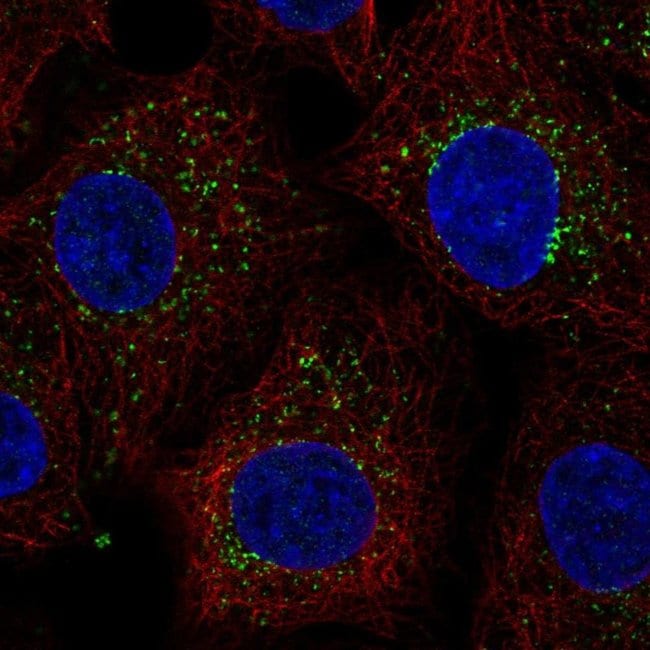
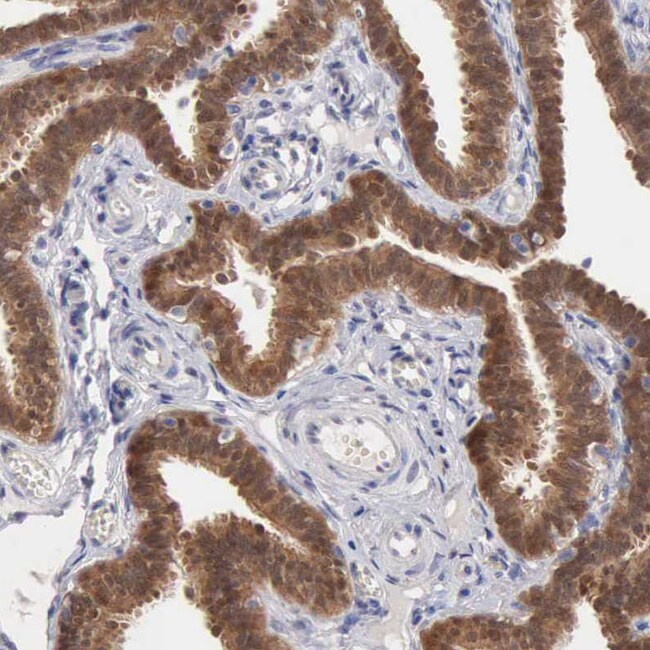
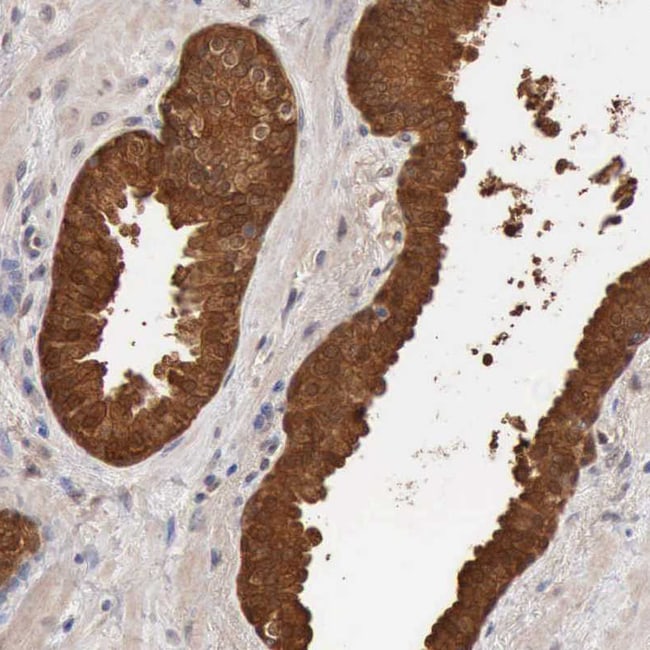
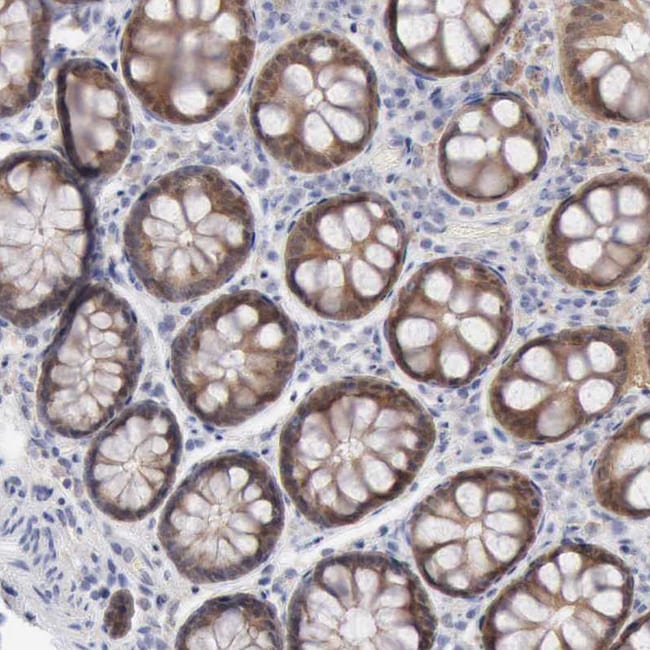

Description
Immunogen sequence: VAGKIGHFLG CSRVVGICGT HEKCILLTSE LGFDAAINYK KDNVAEQLRE SCPAGVDVYF DNVGGNISDT VISQMNENSH IILCGQISQY NKDVPYPPPL SPAIEAIQKE RNITRERFLV LNYKDKFEPG ILQLSQWFKE Highest antigen sequence identity to the following orthologs: Mouse - 86%, Rat - 87%.
ZADH1 (zinc binding alcohol dehydrogenase, domain containing 1), also known as PTGR2 (prostaglandin reductase 2), PGR2 or 15-oxoprostaglandin 13-reductase, is a 351 amino acid cytoplasmic protein that belongs to the NADP-dependent oxidoreductase L4BD family. Functioning as s a 15-oxoprostaglandin 13-reductase, ZADH1 catalyzes the conversion of 15-keto-prostaglandin E2 to 15-keto-13, 14-dihydro-prostaglandin E2 in a NADPH-dependent manner. ZADH1 overexpression has been found to repress PPAR gamma transcriptional activity and adipocyte differentiation. Widely expressed, ZADH1 is found at highest levels in heart, kidney, liver, pancreas and prostate, with moderate levels found in brain, small intestine, lung, testis and skeletal muscle. ZADH1 exists as a monomer, utilizes NADPH as a cofactor, and undergoes alternative splicing to produce two isoforms that are encoded by a gene located on human chromosome 14q24.3.

Specifications
Specifications
| Antigen | PTGR2 |
| Applications | Immunohistochemistry (Paraffin), Immunocytochemistry |
| Classification | Polyclonal |
| Concentration | 0.2 mg/mL |
| Conjugate | Unconjugated |
| Formulation | PBS with 40% glycerol and 0.02% sodium azide; pH 7.2 |
| Gene | PTGR2 |
| Gene Accession No. | Q8N8N7 |
| Gene Alias | 15-oxoprostaglandin 13-reductase; 15-oxoprostaglandin 13-reductase {ECO:0000250; 15-oxoprostaglandin-delta13-reductase; 1810016I24Rik; 9130222H03Rik; 9630002F03Rik; AI838763; B830026H24Rik; epididymis secretory protein Li 298; HEL-S-298; PGR2; PGR-2; PRG2; PRG-2; PRG-2 {ECO:0000250; prostaglandin reductase 2; prostaglandin reductase 2 {ECO:0000250; PTGR2; ptgr2 {ECO:0000250; UniProtKB:Q8VDQ1}; ZADH1; zinc binding alcohol dehydrogenase, domain containing 1; zinc-binding alcohol dehydrogenase domain-containing protein 1 |
| Gene Symbols | PTGR2 |
| Show More |
Product Title
By clicking Submit, you acknowledge that you may be contacted by Fisher Scientific in regards to the feedback you have provided in this form. We will not share your information for any other purposes. All contact information provided shall also be maintained in accordance with our Privacy Policy.
Spot an opportunity for improvement?