Learn More
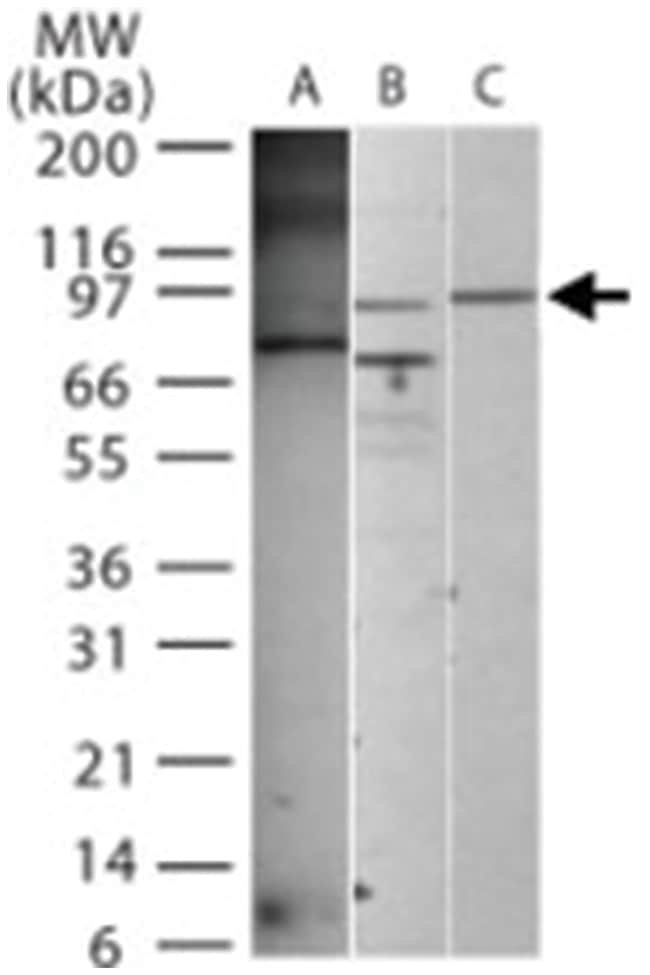
TLR4 Rabbit anti-Human, Mouse, Polyclonal Antibody, Abnova™
Description
The protein encoded by this gene is a member of the Toll-like receptor (TLR) family which plays a fundamental role in pathogen recognition and activation of innate immunity. TLRs are highly conserved from Drosophila to humans and share structural and functional similarities. They recognize pathogen-associated molecular patterns (PAMPs) that are expressed on infectious agents, and mediate the production of cytokines necessary for the development of effective immunity. The various TLRs exhibit different patterns of expression. This receptor is most abundantly expressed in placenta, and in myelomonocytic subpopulation of the leukocytes. It has been implicated in signal transduction events induced by lipopolysaccharide (LPS) found in most gram-negative bacteria. Mutations in this gene have been associated with differences in LPS responsiveness. Also, several transcript variants of this gene have been found, but the protein coding potential of most of them is uncertain. [provided by RefSeq
Specifications
Specifications
| Antigen | TLR4 |
| Applications | Immunoprecipitation, Western Blot |
| Classification | Polyclonal |
| Conjugate | Unconjugated |
| Description | Rabbit polyclonal antibody raised against synthetic peptide of TLR4. |
| Dilution | The optimal working dilution should be determined by the end user. |
| Formulation | In PBS (0.05% BSA, 0.05% sodium azide) |
| Gene | TLR4 |
| Gene Alias | ARMD10/CD284/TOLL/hToll |
| Gene Symbols | TLR4 |
| Show More |
For Research Use Only
By clicking Submit, you acknowledge that you may be contacted by Fisher Scientific in regards to the feedback you have provided in this form. We will not share your information for any other purposes. All contact information provided shall also be maintained in accordance with our Privacy Policy.