missing translation for 'onlineSavingsMsg'
Learn More
Learn More
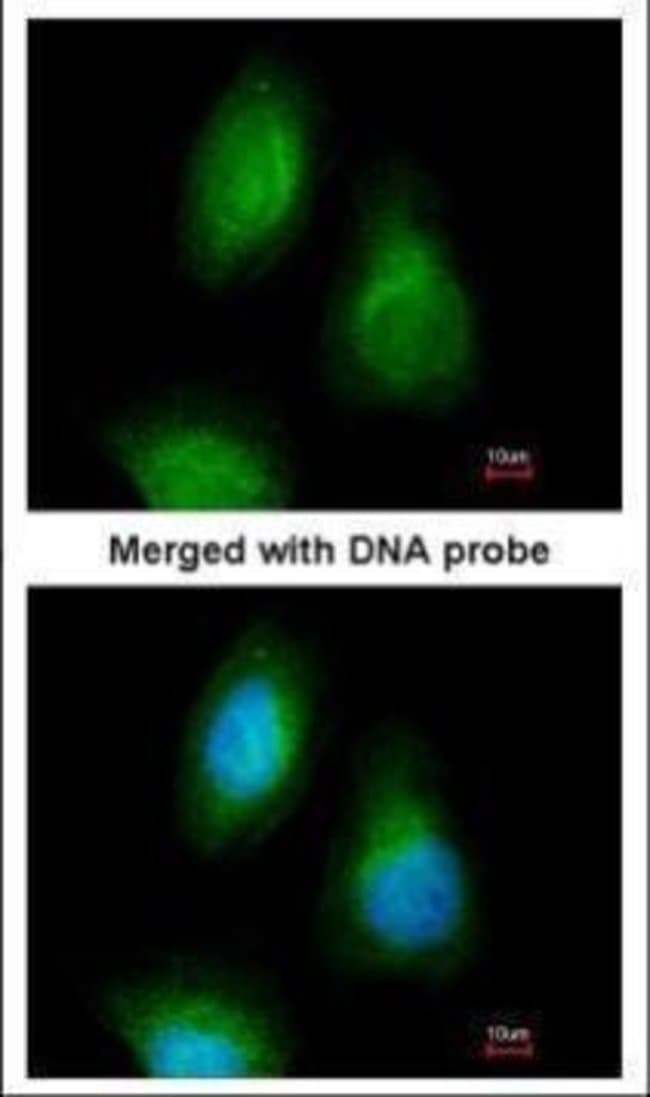
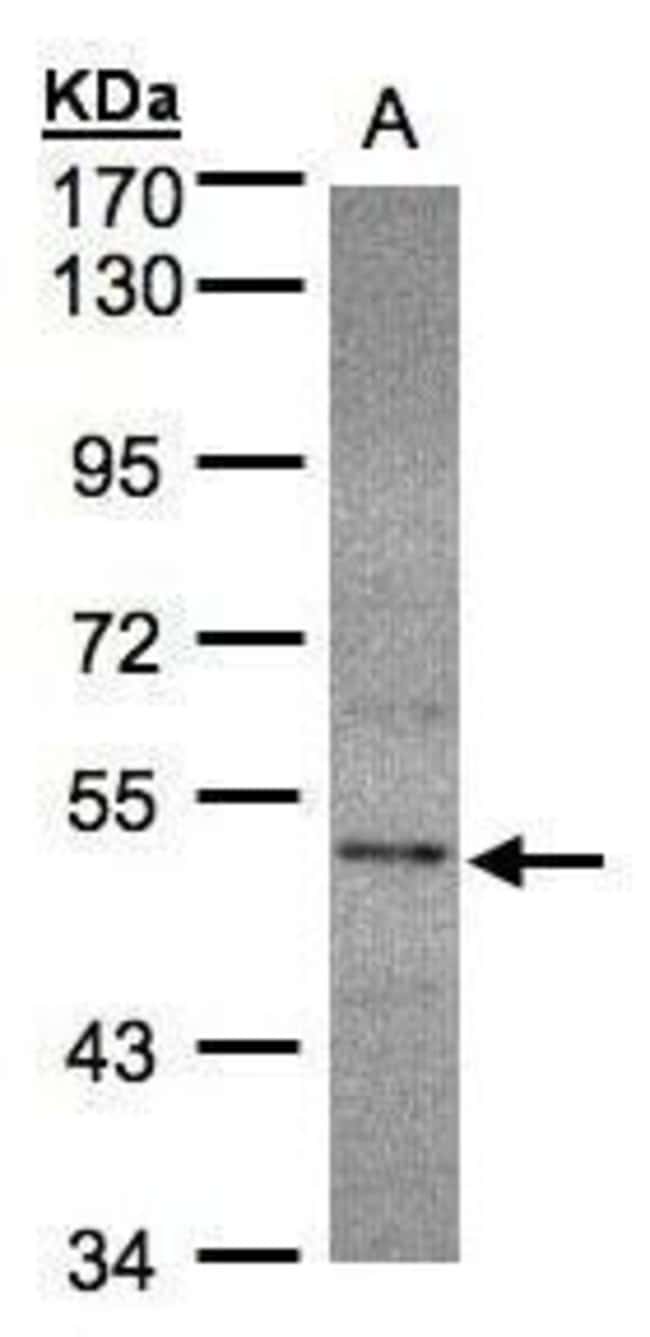
Invitrogen™ SEPHS2 Polyclonal Antibody

Description
Recommended positive controls: 293T, HeLaS3. Predicted reactivity: Mouse (97%), Rat (96%), Xenopus laevis (85%), Dog (98%), Pig (98%), Rabbit (97%), Rhesus Monkey (99%), Chimpanzee (100%), Bovine (97%), Guinea pig (97%). Store product as a concentrated solution. Centrifuge briefly prior to opening the vial.
This protein encodes an enzyme that synthesizes selenophosphate from selenide and ATP. Selenophosphate is the selenium donor used to synthesize selenocysteine, which is co-translationally incorporated into selenoproteins at in-frame UGA codons. This protein itself contains a selenocysteine residue in its predicted active site. The 3' UTR of the gene has a stem-loop secondary structure called a selenocysteine insertion sequence (SECIS) element, which allows UGA to direct the incorporation of selenocysteine rather than signal a translational stop.

Specifications
Specifications
| Antigen | SEPHS2 |
| Applications | Western Blot, Immunocytochemistry |
| Classification | Polyclonal |
| Concentration | 1 mg/mL |
| Conjugate | Unconjugated |
| Formulation | 0.1M tris glycine with 10% glycerol and 0.01% thimerosal; pH 7 |
| Gene | SEPHS2 |
| Gene Accession No. | Q99611 |
| Gene Alias | clone 1000; selenide; selenide, water dikinase 2; Selenium donor protein 2; selenophosphate synthase 2; selenophosphate synthetase 2; Sephs2; Sps2; SPS2b; the SelD gene product; Ysg3 |
| Gene Symbols | SEPHS2 |
| Show More |
Product Title
By clicking Submit, you acknowledge that you may be contacted by Fisher Scientific in regards to the feedback you have provided in this form. We will not share your information for any other purposes. All contact information provided shall also be maintained in accordance with our Privacy Policy.
Spot an opportunity for improvement?