missing translation for 'onlineSavingsMsg'
Learn More

Invitrogen™ STING Recombinant Rabbit Monoclonal Antibody (JM03-47)
GREENER_CHOICE

Product Code. 16386174
Change view
Click to view available options
Quantity:
100 μL
Unit Size:
100µL
1 product options available for selection
Product selection table with 1 available options. Use arrow keys to navigate and Enter or Space to select.
Product Code. Quantity unitSize
16386174 100 μL 100µL
Use arrow keys to navigate between rows. Press Enter or Space to select a product option. 1 options available.
1 options
This item is not returnable. View return policy
Product Code. 16386174 Supplier Invitrogen™ Supplier No. MA532768

Please to purchase this item. Need a web account? Register with us today!

This item is not returnable. View return policy

Rabbit Recombinant Monoclonal Antibody

Recombinant rabbit monoclonal antibodies are produced using in vitro expression systems. The expression systems are developed by cloning in the specific antibody DNA sequences from immunoreactive rabbits. Then, individual clones are screened to select the best candidates for production. The advantages of using recombinant rabbit monoclonal antibodies include: better specificity and sensitivity, lot-to-lot consistency, animal origin-free formulations, and broader immunoreactivity to diverse targets due to larger rabbit immune repertoire.

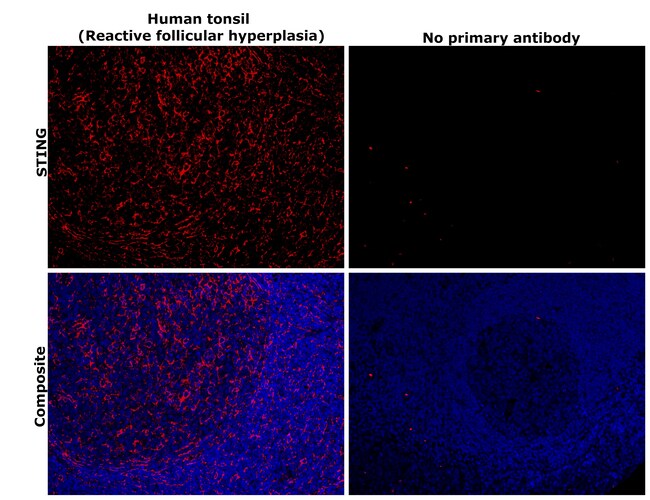
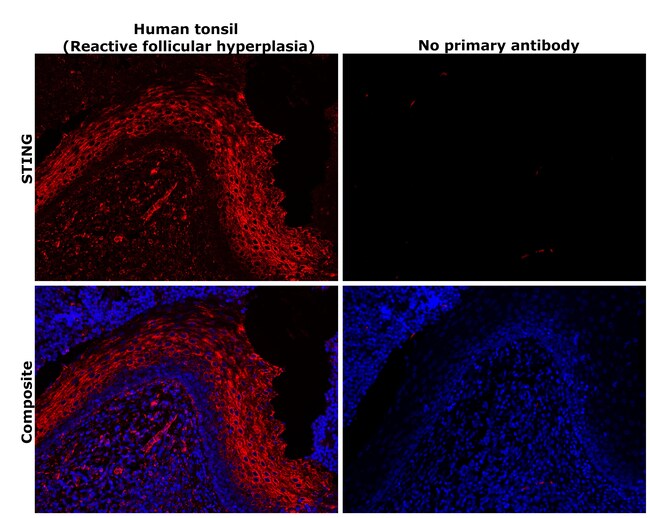
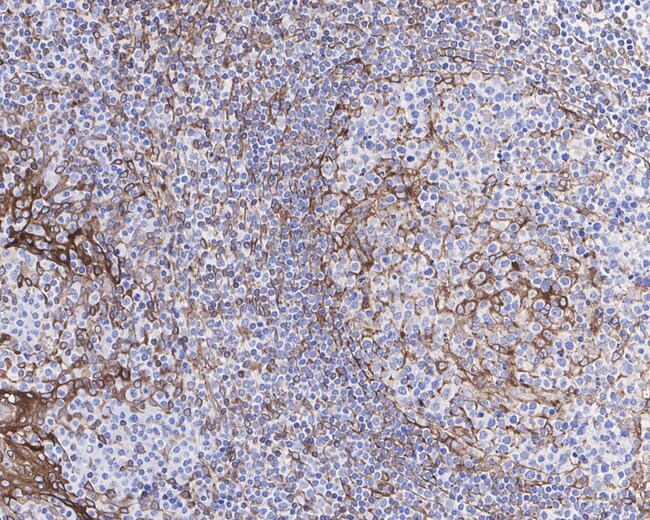
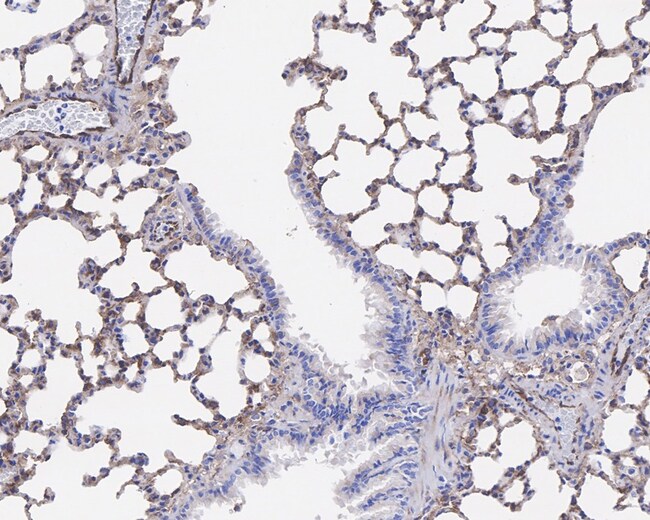
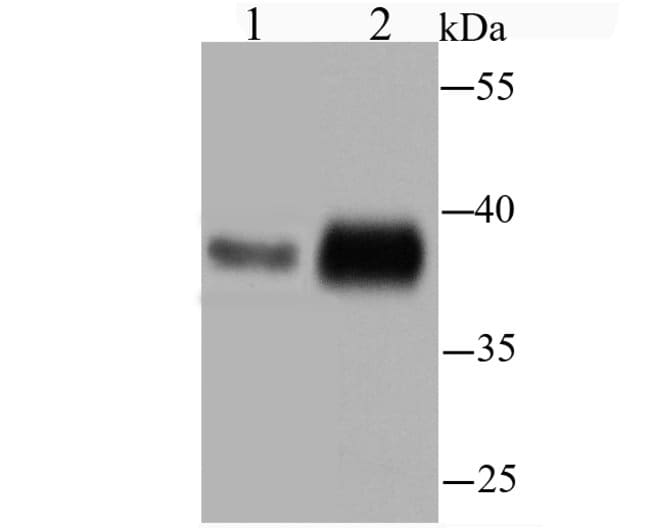
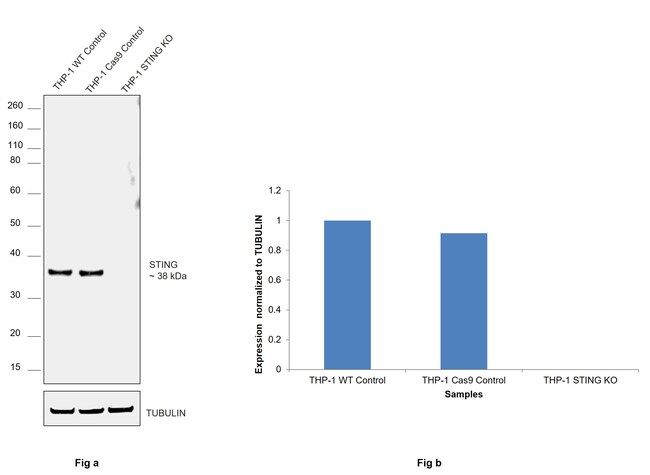
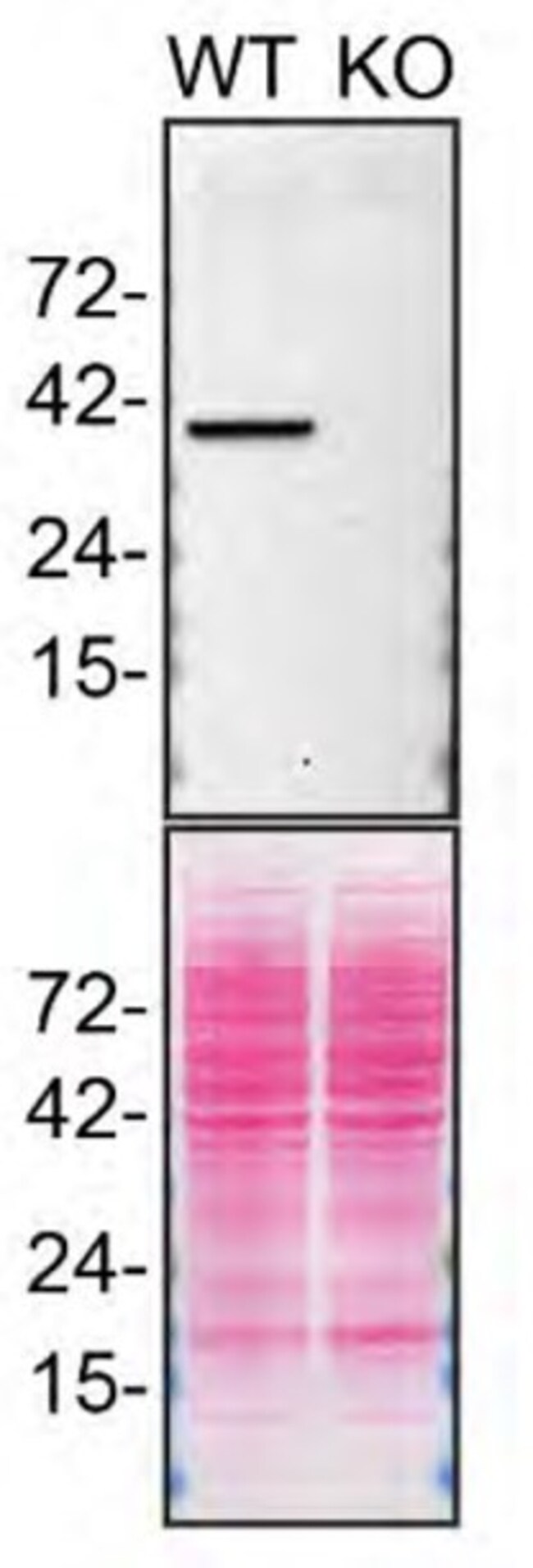
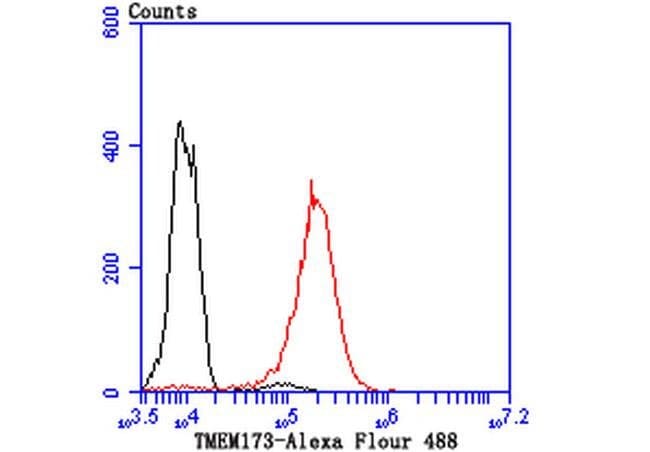
STING is a 379 amino acid containing signaling protein that acts as an important component of innate immune signaling. This signaling protein is able to activate both NF-kappa-B and IRF3 transcription pathways to induce expression of type I interferon (IFN-alpha and IFN-beta) and exert a potent anti-viral state following expression. STING may have translocon function, the translocon possibly being able to influence the induction of type I interferons and is also involved in transduction of apoptotic signals via its association with the major histocompatibility complex class II (MHC-II) thus facilitating the detection of intracellular viral RNA species as well as B-form DNA and mediates death signaling via activation of the extracellular signal-regulated kinase (ERK) pathway. Generally seen in endoplasmic reticulum membrane, cell membrane and mitochondrion outer membrane, it is ubiquitously expressed in most of tissues.
TRUSTED_SUSTAINABILITY

Specifications

Antigen STING
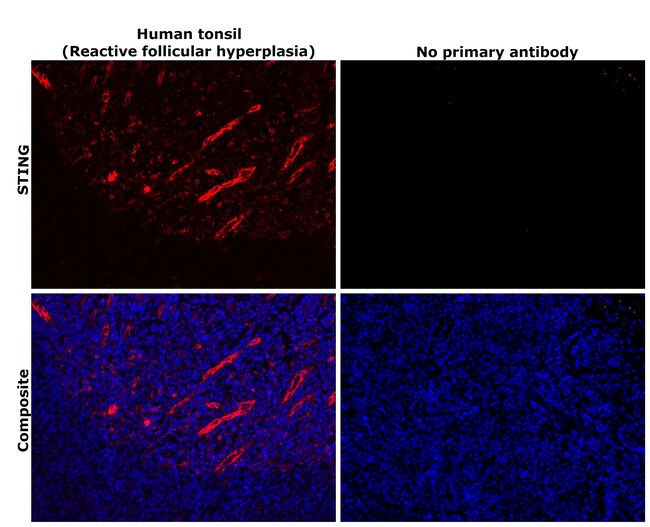
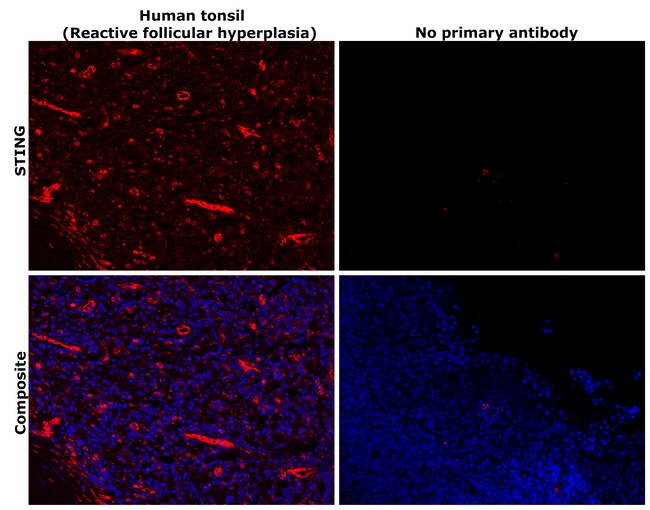
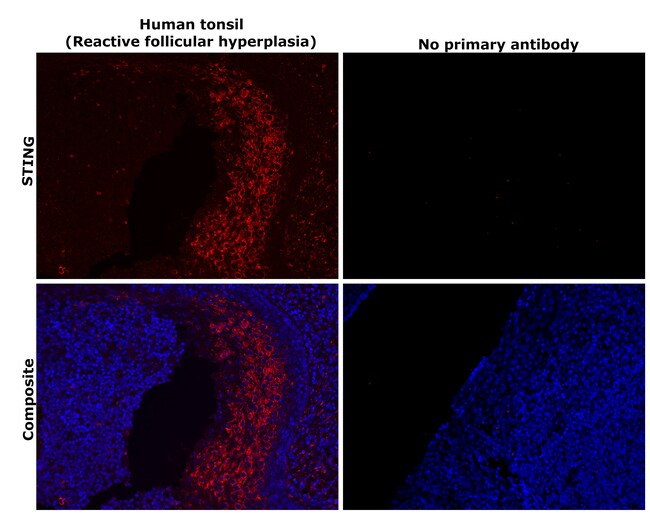
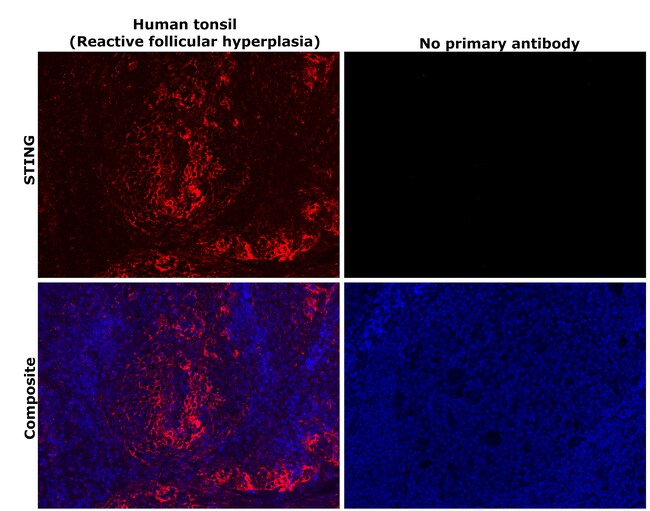
Applications Flow Cytometry, Immunohistochemistry (Paraffin), Western Blot, Immunocytochemistry
Classification Recombinant Monoclonal
Clone JM03-47
Concentration 1 mg/mL
Conjugate Unconjugated
Formulation TBS with 0.05% BSA, 40% Glycerol and 0.05% sodium azide; pH 7.4
Gene TMEM173
Gene Accession No. Q86WV6
Gene Alias 2610307O08Rik; endoplasmic reticulum IFN stimulator; endoplasmic reticulum interferon stimulator; ERIS; hMITA; hSTING; hypothetical LOC533661; mediator of IRF3 activation; Mita; mitochondrial mediator of IRF3 activation; mitochondrial transmembrane protein 173; MMITA; Mpys; mSTING; NET23; N-terminal methionine-proline-tyrosine-serine plasma membrane tetraspanner; poSTING; RGD1562552; rSTING; SAVI; Stimulator of interferon genes protein; stimulator of interferon response cGAMP interactor 1; STING; STING1; tm173; Tmem173; Transmembrane protein 173
Gene Symbols TMEM173
Host Species Rabbit
Immunogen Recombinant protein within Human TMEM173 aa 220-379.
Purification Method Protein A
Quantity 100 μL
Regulatory Status RUO
Primary or Secondary Primary
Gene ID (Entrez) 340061
Target Species Human
Content And Storage Store at 4°C short term. For long term storage, store at -20°C, avoiding freeze/thaw cycles.
Product Type Antibody
Form Liquid
Isotype IgG
Show More Show Less
Product Title
Select an issue

By clicking Submit, you acknowledge that you may be contacted by Fisher Scientific in regards to the feedback you have provided in this form. We will not share your information for any other purposes. All contact information provided shall also be maintained in accordance with our Privacy Policy.