missing translation for 'onlineSavingsMsg'
Learn More
Learn More
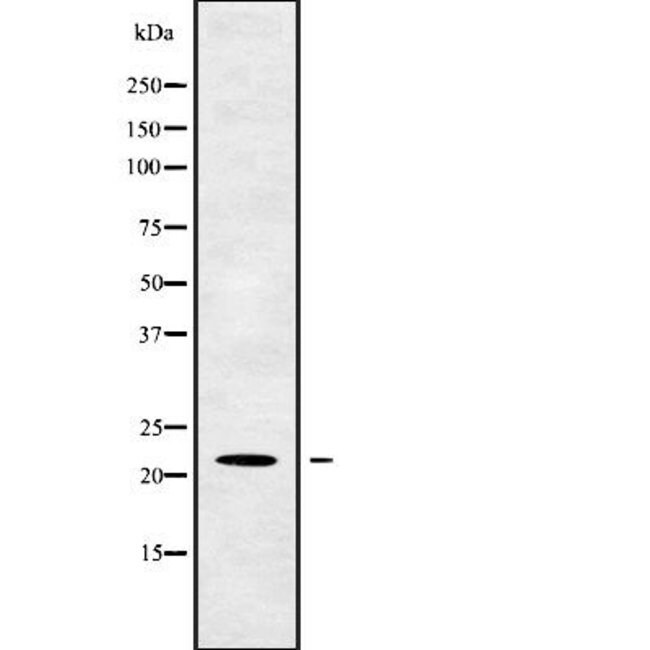

Description
Antibody detects endogenous levels of total TM2D1.
Proteolytic cleavage of the Amyloid protein precursor (APP) gives rise to the β-Amyloid and Amyloid A4 proteins, which are present in human platelets. Amyloid deposition is associated with type II diabetes, Down syndrome and a variety of neurological disorders, including Alzheimer's disease. Proteolytic cleavage of APP leads to the formation of the Amyloid β/A4 Amyloid protein. This protein is involved in the formation of neurofibrillary tangles and plaques that characterize the senile plaques of Alzheimer's patients. BBP (Beta-amyloid-binding protein), also known as TM2D1 (TM2 domain-containing protein 1), is a 207 amino acid multi-pass membrane protein containing a G protein-coupling module that allows for interaction with the β-amyloid peptide of APP. In cell culture, expression of BBP induces caspase-dependent vulnerability to β-amyloid peptide toxicity, suggesting that it is a target of β-amyloid and may be involved in the molecular pathophysiology of Alzheimer's disease.

Specifications
Specifications
| Antigen | TM2D1 |
| Applications | Western Blot |
| Classification | Polyclonal |
| Concentration | 1 mg/mL |
| Conjugate | Unconjugated |
| Formulation | PBS with 50% glycerol and 0.02% sodium azide; pH 7.4 |
| Gene | TM2D1 |
| Gene Accession No. | Q99MB3, Q9BX74 |
| Gene Alias | 2310026L18Rik; AA990549; Amyloid-beta-binding protein; Bbp; beta-amyloid binding protein; beta-amyloid-binding protein; hBBP; mBBP; TM2 domain containing 1; TM2 domain-containing protein 1; Tm2d1 |
| Gene Symbols | TM2D1 |
| Show More |
Product Title
By clicking Submit, you acknowledge that you may be contacted by Fisher Scientific in regards to the feedback you have provided in this form. We will not share your information for any other purposes. All contact information provided shall also be maintained in accordance with our Privacy Policy.
Spot an opportunity for improvement?