All Primary Antibodies
Primary antibodies, immunoglobulins that bind to specific proteins or other biomolecules, are used in many research applications and protocols to detect targets of interest. They are developed using different animal hosts, including mouse, rat, rabbit, goat, sheep, and many others.
Monoclonal and Polyclonal Antibodies
One type of primary antibodies, monoclonal antibodies, provides high reproducibility and low cross-reactivity and background noise. Another type, polyclonal antibodies, often costs less and provides greater affinity and quicker binding. Both are produced using plasma B cells, but the former uses the same clone and the latter uses different clones. Monoclonal antibodies require hybridoma cell lines, and polyclonal antibodies do not.
There are also recombinant monoclonal antibodies with similar benefits, like high affinity, scalability, and specificity. They are produced using in vitro cloning of plasma B cells and expression hosts.
Conjugated Primary Antibodies
Antibodies can be labeled with various fluorophores or detection agents or used without labels. Labeled primary antibodies, also known as conjugated primary antibodies, help researchers simplify and streamline their applications. They are coupled with common enzymes and dyes such as Alexa Fluor and often used in protein and cell analysis.
Applications
Antibodies for life sciences applications are used in flow cytometry, western blotting, ELISA, immunohistochemistry, and immunocytochemistry. Secondary antibodies can be added to support the detection and purification of certain antigens. They bind to the primary antibody, which binds to the antigen of interest. Finding the right combination of antibodies can result in greater antigen specificity and a strong, detectable signal.
- (7)
- (1)
- (7)
- (8)
- (7)
- (1)
- (1)
- (1)
- (67)
- (3)
- (67)
- (1)
- (2)
- (2)
- (2)
- (2)
- (2)
- (2)
- (2)
- (2)
- (3)
- (2)
- (3)
- (2)
- (2)
- (2)
- (3)
- (2)
- (2)
- (2)
- (2)
- (1)
- (26)
- (1)
- (67)
- (1)
- (2)
- (45)
- (6)
- (8)
- (4)
- (3)
- (2)
- (2)
Filtered Search Results
Invitrogen™ Sostdc1 Polyclonal Antibody
Greener Choice Product
This product offers one or more environmental benefits itemized in the U.S. FTC Green Guides.
Learn More About the Greener Choice Program
This product offers one or more environmental benefits itemized in the U.S. FTC Green Guides.
Learn More About the Greener Choice Program
Rabbit Polyclonal Antibody
Sostdc1 Polyclonal Antibody, Invitrogen™
Greener Choice Product
This product offers one or more environmental benefits itemized in the U.S. FTC Green Guides.
Learn More About the Greener Choice Program
This product offers one or more environmental benefits itemized in the U.S. FTC Green Guides.
Learn More About the Greener Choice Program
Rabbit Polyclonal Antibody
| Content And Storage | Store at 4°C short term. For long term storage, store at -20°C, avoiding freeze/thaw cycles. |
|---|---|
| Target Species | Human |
| Host Species | Rabbit |
| Conjugate | Unconjugated |
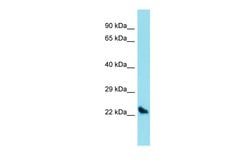
| Applications | Western Blot,Western Blot |
| Form | Liquid |
| Isotype | IgG |
| Gene Accession No. | Q6X4U4 |
| Concentration | 0.5 mg/mL |
| Antigen | Sostdc1 |
| Gene Symbols | SOSTDC1 |
| Regulatory Status | RUO |
| Purification Method | Antigen affinity chromatography, Protein A |
| Gene Alias | 0610006G05Rik; CDA019; cystine-knot containing secreted protein; DAND7; Ectodermal BMP inhibitor; ECTODIN; sclerostin domain containing 1; sclerostin domain-containing protein 1; Sclerostin-like protein; similar to cystine knot-containing secreted protein; Sostdc1; Sostl; USAG1; USAG-1; Uterine sensitization-associated gene 1 protein; uterine sensitization-associated protein 1; uterine sensitization-associated protein-1; Wise; Wnt-signaling modulator |
| Gene | SOSTDC1 |
| Product Type | Antibody |
| Gene ID (Entrez) | 25928 |
| Formulation | PBS with 50% glycerol and 0.05% ProClin 300; pH 7.4 |
| Immunogen | Phe24-Ser206 (Accession Q6X4U4), with N-terminal His Tag. |
| Classification | Polyclonal |
| Primary or Secondary | Primary |
Invitrogen™ Sostdc1 Polyclonal Antibody
Greener Choice Product
This product offers one or more environmental benefits itemized in the U.S. FTC Green Guides.
Learn More About the Greener Choice Program
This product offers one or more environmental benefits itemized in the U.S. FTC Green Guides.
Learn More About the Greener Choice Program
Rabbit Polyclonal Antibody
Sostdc1 Monoclonal Antibody (C1), Invitrogen™
Greener Choice Product
This product offers one or more environmental benefits itemized in the U.S. FTC Green Guides.
Learn More About the Greener Choice Program
This product offers one or more environmental benefits itemized in the U.S. FTC Green Guides.
Learn More About the Greener Choice Program
Mouse Monoclonal Antibody
| Content And Storage | Store at 4°C short term. For long term storage, store at -20°C, avoiding freeze/thaw cycles. |
|---|---|
| Target Species | Human |
| Host Species | Mouse |
| Conjugate | Unconjugated |
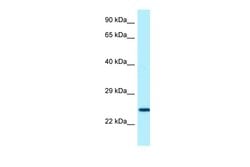
| Applications | Western Blot |
| Form | Liquid |
| Isotype | IgG1 κ |
| Gene Accession No. | Q6X4U4 |
| Concentration | 1 mg/mL |
| Antigen | Sostdc1 |
| Gene Symbols | SOSTDC1 |
| Regulatory Status | RUO |
| Purification Method | Protein A/G |
| Gene Alias | 0610006G05Rik; CDA019; cystine-knot containing secreted protein; DAND7; Ectodermal BMP inhibitor; ECTODIN; sclerostin domain containing 1; sclerostin domain-containing protein 1; Sclerostin-like protein; similar to cystine knot-containing secreted protein; Sostdc1; Sostl; USAG1; USAG-1; Uterine sensitization-associated gene 1 protein; uterine sensitization-associated protein 1; uterine sensitization-associated protein-1; Wise; Wnt-signaling modulator |
| Gene | SOSTDC1 |
| Product Type | Antibody |
| Gene ID (Entrez) | 25928 |
| Formulation | PBS with 50% glycerol and 0.05% ProClin 300; pH 7.4 |
| Immunogen | Phe24-Ser206 (Accession Q6X4U4), with N-terminal His Tag. |
| Classification | Monoclonal |
| Primary or Secondary | Primary |
| Clone | C1 |
Invitrogen™ Sostdc1 Polyclonal Antibody
Greener Choice Product
This product offers one or more environmental benefits itemized in the U.S. FTC Green Guides.
Learn More About the Greener Choice Program
This product offers one or more environmental benefits itemized in the U.S. FTC Green Guides.
Learn More About the Greener Choice Program
Rabbit Polyclonal Antibody
Invitrogen™ Sostdc1 Polyclonal Antibody
Greener Choice Product
This product offers one or more environmental benefits itemized in the U.S. FTC Green Guides.
Learn More About the Greener Choice Program
This product offers one or more environmental benefits itemized in the U.S. FTC Green Guides.
Learn More About the Greener Choice Program
Rabbit Polyclonal Antibody
Human USAG1 Antibody, R&D Systems™
Greener Choice Product
This product offers one or more environmental benefits itemized in the U.S. FTC Green Guides.
Learn More About the Greener Choice Program
This product offers one or more environmental benefits itemized in the U.S. FTC Green Guides.
Learn More About the Greener Choice Program
Sheep Polyclonal Antibody
| Host Species | Rabbit |
|---|---|
| Conjugate | Unconjugated |
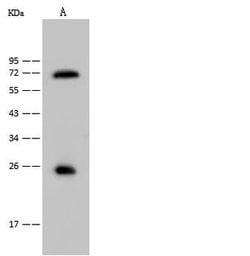
| Applications | Western Blot |
| Isotype | IgG |
| Gene Accession No. | NP_056279 |
| Research Discipline | Signal Transduction |
| Antigen | USAG1/SOSTDC1 |
| Gene Symbols | SOSTDC1 |
| Regulatory Status | RUO |
| Molecular Weight of Antigen | 21 kDa |
| Gene Alias | cystine-knot containing secreted protein, DKFZp564D206, Ectodermal BMP inhibitor, ECTODIN, sclerostin domain containing 1, sclerostin domain-containing protein 1, USAG-1, USAG1uterine sensitization-associated protein-1, Uterine sensitization-associated gene 1 protein |
| Gene ID (Entrez) | 25928 |
| Immunogen | The immunogen for this antibody is SOSTDC1 - C-terminal region. Peptide sequence ITVVTACKCKRYTRQHNESSHNFESMSPAKPVQHHRERKRASKSSKHSMS. |
| Classification | Polyclonal |
| Primary or Secondary | Primary |